

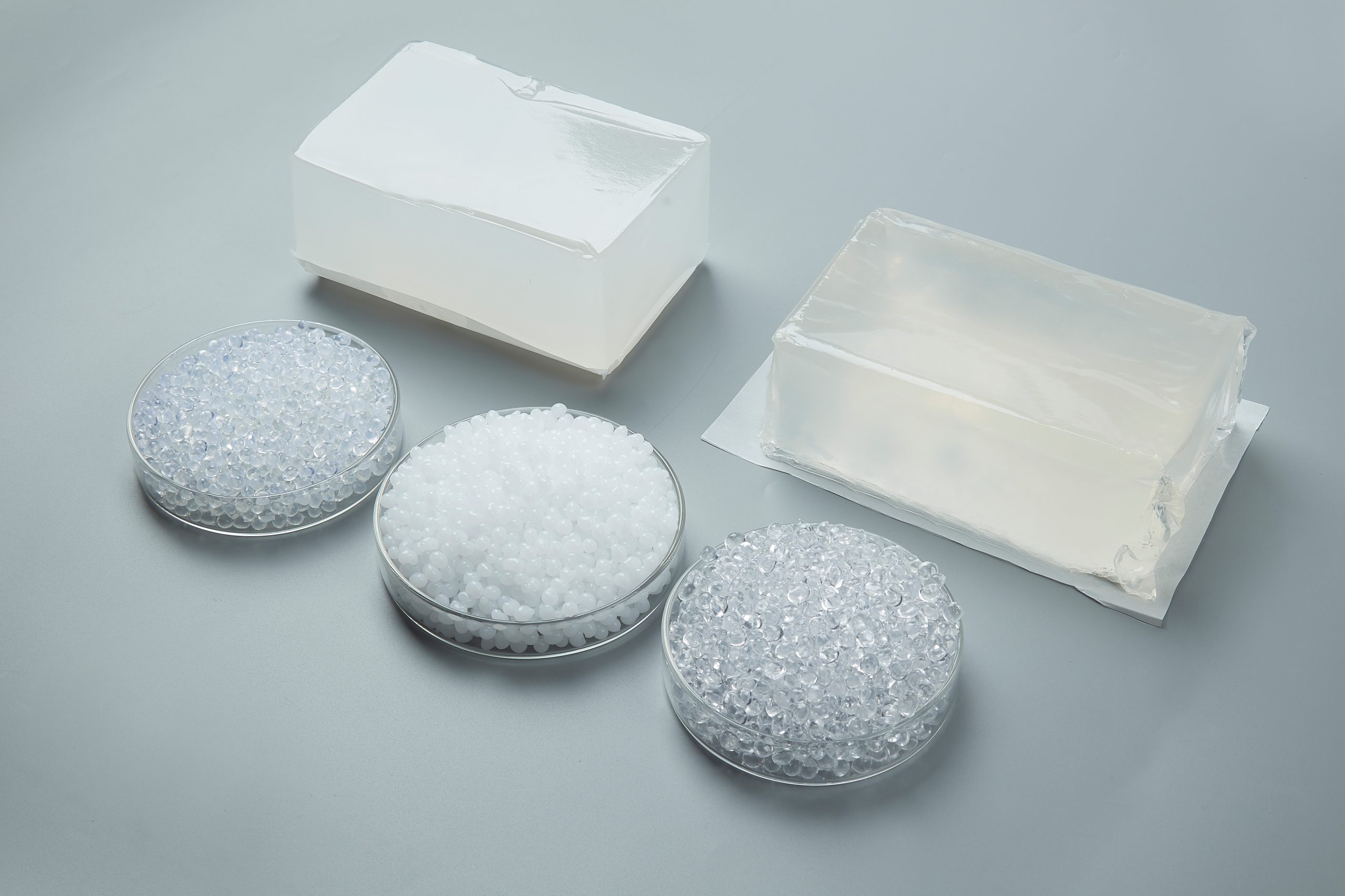
A polyolefin hot melt adhesive is one of the most versatile chemistries in modern industrial bonding. It is valued for clean processing, a broad temperature window, and strong adhesion to low-surface-energy substrates. These adhesives are made from amorphous polyalphaolefin or ethylene-based copolymers. They combine the easy flow of EVA with much higher heat and oxidation resistance. Global demand for polyolefin hot melts is growing at an estimated 5.6 percent CAGR. The market is set to reach USD 2.4 billion by 2028 as packaging, filtration, hygiene, and automotive lines move away from solvent-based systems. This guide explains the chemistry behind polyolefin hot melt adhesive. It covers the properties that set it apart from EVA and the applications where it delivers the strongest bonds.
What Is Polyolefin Hot Melt Adhesive
Polyolefin hot melt adhesive is a 100 percent solid, thermoplastic bonding material based on polyolefin polymers. EVA uses vinyl acetate as a comonomer, but polyolefin grades use propylene, butene-1, or ethylene-octene backbones. The result is a non-polar molecular structure. That structure bonds well to polyolefin substrates, including polypropylene films, polyethylene-coated papers, and non-woven fabrics. The polymer chain contains no ester groups, so it resists hydrolysis and thermal oxidation far better than EVA at temperatures above 80 degrees Celsius. Devote’s full polyolefin hot melt adhesive product range includes both homopolymer APAO grades and reactive PO-modified blends for demanding production lines.
Molecular Structure and Bonding Mechanism
The polymer backbone in polyolefin hot melt adhesive is a long chain of carbon atoms. Only hydrogen and short alkyl side groups sit on the chain. With no polar functional groups, the adhesive cannot form strong dipole interactions. Instead, it penetrates porous substrates and locks mechanically into surface irregularities. Once the molten adhesive cools, van der Waals forces take over. The bond develops within 1 to 3 seconds depending on the grade and substrate temperature. Amorphous polyalphaolefin (APAO) variants add propylene chains to soften the polymer and lower viscosity. This allows lower application temperatures around 140 to 160 degrees Celsius. Crystalline polyethylene segments, when added, raise the softening point and improve elevated-temperature performance up to 110 degrees Celsius.
Key Properties of Polyolefin Hot Melt Adhesive
Six technical properties set polyolefin hot melt adhesive apart from standard EVA grades. Buyers comparing formulations should review the technical data sheet for each value. Confirm the data matches the production line’s actual conditions. Performance also depends on the application equipment. Slot die, bead, and spiral spray all have different viscosity and open-time requirements. Matching the grade to the equipment is as important as matching it to the substrate.
| Property | Typical Range | Why It Matters |
|---|---|---|
| Viscosity | 800 to 6,000 mPas at 160C | Tunable to slot die, bead, or spiral application |
| Softening point | 90C to 165C | Higher heat resistance than most EVA grades |
| Open time | 5 to 60 seconds | Adjustable for manual or high-speed automated lines |
| Set time | 1 to 5 seconds | Supports pleating, packaging, and assembly speeds |
| Heat resistance | Up to 110C continuous | Stable under hood, hot fill, and tropical climates |
| Chemical resistance | Good against water, acids, alkalis | Suitable for hygiene and outdoor assemblies |

Advantages of Polyolefin Hot Melt Adhesive Over EVA
EVA is the most widely used hot melt chemistry, but polyolefin offers clear gains where heat, oxidation, or chemical exposure is part of the duty cycle. EVA adhesives soften between 70 and 90 degrees Celsius. Polyolefin grades hold their bond strength well above 100 degrees Celsius. Polyolefin also resists UV-induced oxidation better. That matters for outdoor packaging or storage in warm warehouses. The chemistry contains no acetate smell. This is a real advantage for hygiene products, food-contact packaging, and cabin air filters. For a side-by-side comparison of selection criteria, see our guide on EVA vs PO adhesive selection.
| Attribute | EVA Hot Melt | Polyolefin Hot Melt | Best Choice |
|---|---|---|---|
| Upper service temperature | 70 to 90C | Up to 110C | PO wins under hood and hot fill |
| Odor and VOC | Mild acetate smell | Essentially odor-free | PO preferred for indoor and food |
| Adhesion to PP and PE | Limited | Excellent | PO matches substrate chemistry |
| UV and oxidation stability | Moderate | High | PO lasts longer in warm storage |
| Cost per kg (FOB China) | USD 1.7 to 2.0 | USD 1.9 to 2.6 | EVA slightly cheaper |
Top Applications for Polyolefin Hot Melt Adhesive
Polyolefin hot melt adhesive is now standard in several industries that demand more than EVA can deliver. Air filter manufacturers use PO grades to bond melt-blown polypropylene media to plastic frames. The chemistry matches the substrate and prevents media peel-back under heat soak. For a product example, see our PO adhesive for air filter manufacturing and 3012K PO grade for filter assembly grades. Hygiene producers use PO for elastic attachment and stretch panel bonding where creep resistance is critical. Packaging converters choose PO for freezer-grade cartons and hot-fill cases where EVA would soften. In textile and garment assembly, PO replaces solvent-based cements that face tightening VOC rules. Devote supplies grades such as textile and garment adhesive grades for those lines.
| Application | Bonding Requirement | Why PO Performs |
|---|---|---|
| Air and HEPA filter assembly | Melt-blown PP media to ABS/PP frame | Matches substrate polarity, resists heat soak |
| Hygiene elastic attachment | Elastic strands to non-woven backsheet | Low creep under tension, skin-safe |
| Freezer and hot-fill packaging | Carton sealing below -20C or above 60C | Stable bond across wide temperature range |
| Textile lamination and garment | Fabric-to-fabric bonding without solvent | Compliant with tightening VOC limits |
| Automotive interior assembly | Trunk liners, headliner attachments | Low odor, passes cabin air quality tests |
How to Select the Right PO Grade
Choosing the right polyolefin hot melt adhesive starts with three questions. What substrates will be bonded? What is the peak service temperature? How fast does the line run? If the substrates are primarily polyolefin-based, choose an APAO grade with low surface tension for wet-out. If higher heat resistance is needed, choose a metallocene PO or a PO-modified blend. Line speed drives open-time requirements. Lines running above 30 meters per minute usually need a fast-set grade with open time under 10 seconds. Always run a peel test on the actual substrate at production temperature before approving a new grade. Document the test method so the result can be replicated during supplier audits. For broader context on the underlying chemistry, the Sphere Search polyolefin overview is a useful independent reference.
Frequently Asked Questions About Polyolefin Hot Melt Adhesive
Is polyolefin hot melt adhesive food-safe?
Most PO grades meet FDA 21 CFR 175.105 indirect food contact requirements when properly formulated. Confirm each grade’s food-contact status with the supplier’s compliance statement. Do this before using it in packaging or filtration products that contact food.
Can polyolefin replace EVA in packaging lines without equipment changes?
In most cases, yes. PO grades are available in similar viscosity ranges. They can be applied through existing slot die, bead, or spiral nozzles. Tank and hose temperatures may need to be raised by 10 to 20 degrees Celsius because PO typically runs slightly hotter than EVA. Always purge EVA residue before switching to avoid cross-contamination at the bond line.
How does polyolefin compare with metallocene hot melt adhesives?
Metallocene polyolefins (mPO) offer tighter molecular weight distribution. This gives more consistent open time and lower odor. They cost more than standard APAO grades. They deliver cleaner processing on high-speed packaging and hygiene lines. For demanding OEM applications, mPO is often the preferred upgrade path from conventional EVA or APAO chemistry. Ask your supplier for comparative peel and shear data on your substrate before specifying mPO for a new line.
Get the Right Polyolefin Adhesive from Devote
Polyolefin hot melt adhesive delivers the heat resistance, low odor, and substrate versatility that modern production lines require. Whether you are bonding melt-blown filter media, sealing freezer cartons, or laminating textiles without solvents, there is a PO grade tailored to your application. About Devote is an ISO 9001 certified manufacturer in Shenzhen. We supply EVA, polyolefin, polyamide, and pressure-sensitive hot melt adhesives to customers in more than 40 countries. For samples, technical data sheets, or formulation advice, contact our technical team today. Our application engineers can help you match grade, viscosity, and equipment settings to your specific production line.

