How Hot Melt Adhesives Are Made: From Raw Material to Production Line
Understanding how hot melt adhesive is made is more than a manufacturing curiosity — it is the foundation of informed supplier selection. The production process directly determines bond strength, thermal stability, colour consistency, and long-term performance on your line. Whether you are sourcing EVA-based sealants for carton packaging or high-performance polyolefin adhesives for automotive filter assembly, the steps taken inside the factory shape every property you care about downstream.
This guide walks you through the complete hot melt adhesive manufacturing process — from raw material sourcing to compounding, quality control, and final certification — so you can evaluate suppliers with confidence.
What Goes Into a Hot Melt Adhesive: Raw Material Selection
Every hot melt adhesive is a precisely engineered blend of three core component families, each playing a distinct functional role:
| Component | Typical Examples | Function | Weight % |
|---|---|---|---|
| Base Polymer | EVA, APAO, PA, PES, SBC (SIS/SBS) | Provides cohesive strength, elasticity, and thermal behaviour | 30–60% |
| Tackifier Resin | Hydrocarbon resin, rosin ester, terpene resin | Controls tack, open time, and substrate wetting | 20–45% |
| Plasticiser / Wax | Paraffin wax, Fischer-Tropsch wax, naphthenic oil | Adjusts melt viscosity, set speed, and flexibility at low temperatures | 5–30% |
| Stabiliser / Antioxidant | Hindered phenol (Irganox series), phosphite | Prevents thermal degradation during processing and storage | 0.1–1% |
| Optional Additives | Colorants, flame retardants, UV absorbers, fillers | Application-specific performance modification | Variable |
Raw material quality at this stage is the single biggest determinant of finished product performance. Reputable manufacturers source base polymers from tier-1 suppliers (e.g., ExxonMobil, Eastman, Evonik) with traceable Certificates of Analysis (CoA) for each incoming batch. Lower-tier producers often substitute with off-spec or recycled polymer — the hidden source of performance inconsistency in the field.
The Hot Melt Adhesive Manufacturing Process: Step by Step
Hot melt adhesive manufacturing follows a continuous compounding model. Here is how how hot melt adhesive is made in a modern, ISO-certified facility:
Step 1 — Incoming Material Inspection
Every raw material shipment undergoes identity verification and physical testing before it enters the production floor. Tests include melt flow index (ASTM D1238), softening point (ASTM E28), colour (APHA/Gardner scale), and moisture content for hygroscopic polymers like PA and PES. Batches that fall outside specification tolerances are rejected or quarantined.
Step 2 — Pre-Weighing and Batch Formulation
Formulations are digitally managed in a Manufacturing Execution System (MES). Operators load pre-weighed components into stainless-steel mixing vessels, following locked recipes that prevent manual substitution. Batch accuracy is typically controlled to ±0.5% by weight for major components and ±0.05% for additives such as antioxidants.
Step 3 — Melt Compounding
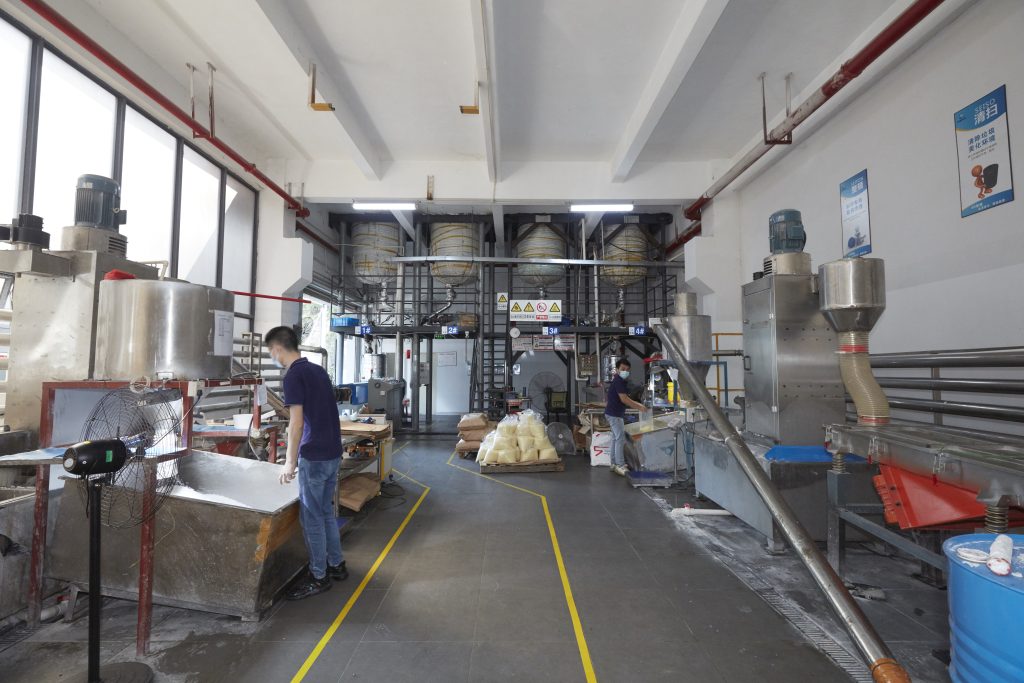
This is the heart of the process. Components enter a heated, jacketed mixing reactor — typically a twin-shaft planetary mixer or a high-shear sigma-blade kneader — where they are brought together at temperatures between 130°C and 200°C, depending on the polymer system. The mixing cycle typically runs 2–4 hours until a homogeneous melt with a consistent viscosity profile is achieved.
Key engineering parameters monitored during compounding:
- Temperature profile — prevents localised degradation at hot spots
- Mixing torque — indicates homogeneity progress
- Nitrogen blanketing — used for PA and PES systems to prevent oxidative discolouration
- Melt viscosity (inline measurement) — compared against target specification
Step 4 — Filtration and Degassing
The molten blend passes through a multi-stage filtration system — typically 100-micron followed by 40-micron mesh filters — to remove undissolved particles, gel bodies, and carbonised material. This step is critical for nozzle-applied adhesives in filtration and hygiene manufacturing, where even a single particle can cause spray nozzle blockages or bond failures.
Step 5 — Forming and Packaging
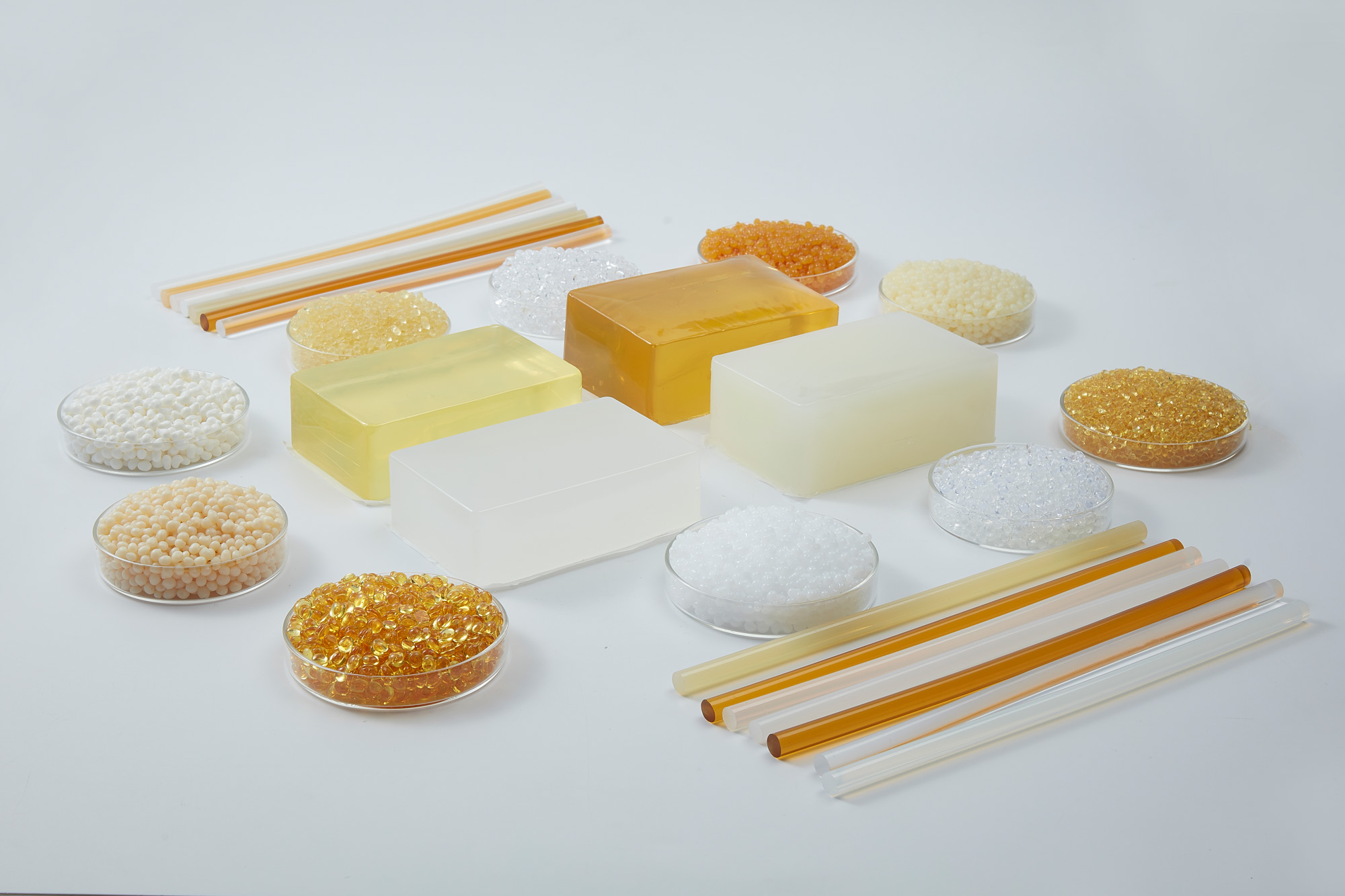
The filtered melt is shaped into its final product form. Common output formats include:
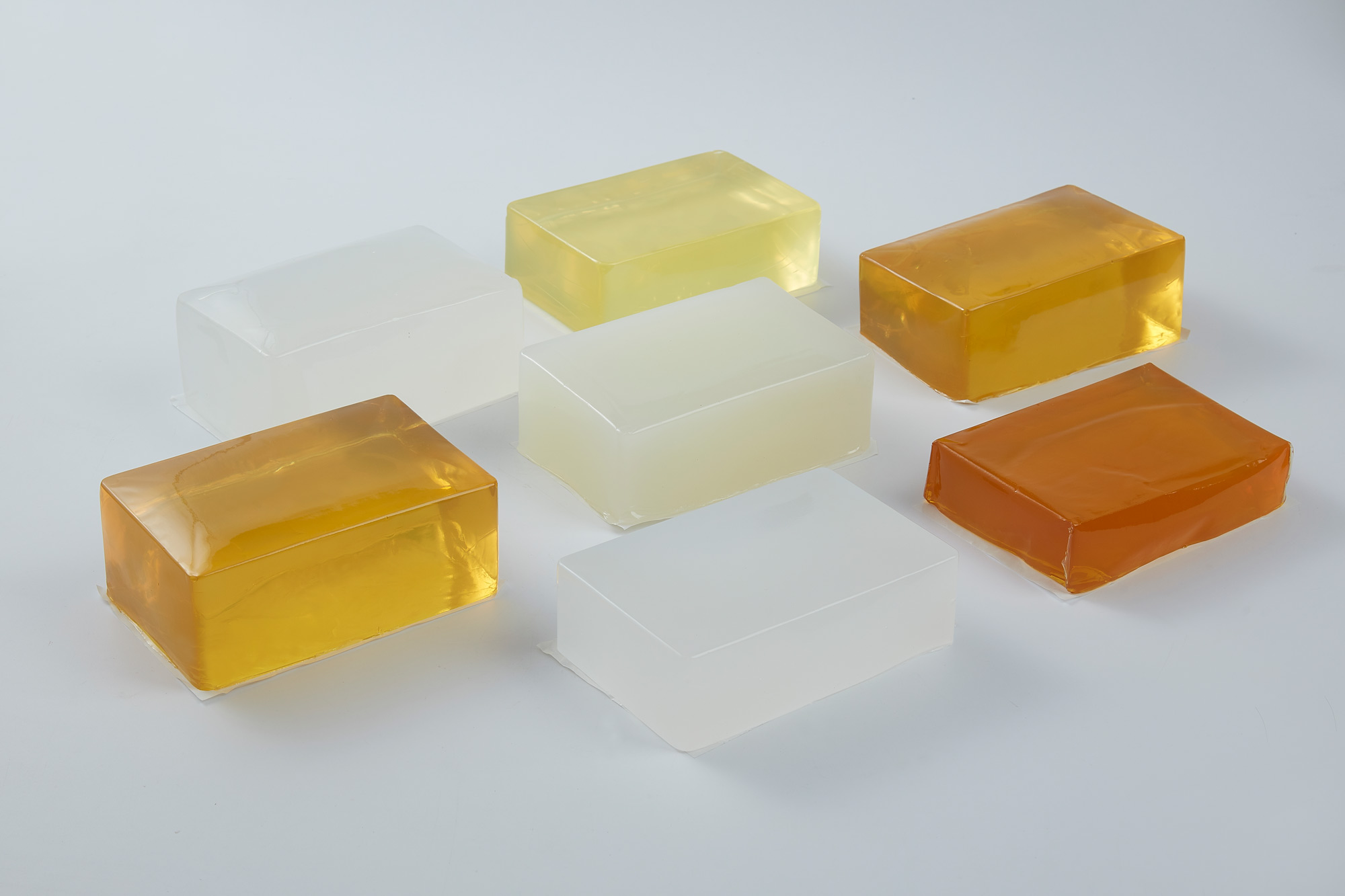
- Pillow / block form — cast onto a chilling conveyor, cut into blocks of 1–5 kg, wrapped in release film
- Glue sticks — extruded through a die into 7 mm, 12 mm, or 43 mm diameter rods, cut to standard lengths
- Granules / pellets — underwater strand pelletising for applications requiring exact dosing in automated equipment
- Cartridges — filled directly into aluminium or plastic cartridges for precision dispensing systems

Quality Control: What ISO 9001 Certification Means in Practice
A credible hot melt adhesive manufacturing operation runs quality control at three distinct checkpoints — not just at the end of the line.
| QC Stage | Tests Performed | Standard / Instrument |
|---|---|---|
| Incoming (IQC) | Softening point, MFI, colour, moisture | ASTM E28, ASTM D1238, APHA |
| In-Process (IPQC) | Viscosity, colour development, homogeneity | Brookfield viscometer (ASTM D3236) |
| Outgoing (OQC) | Softening point, peel strength, open time, set time, colour, heat resistance | EN 1238, EN 1239, ASTM D1876, client TDS spec |
Under ISO 9001:2015, every batch must be traceable from raw material lot numbers through to the finished product label. This traceability chain is not paperwork formality — it is your supply chain insurance. If a batch fails in the field, you can trace exactly which raw materials were involved, which machine it was produced on, and who approved its release.
According to the Adhesives and Sealants Council (ASC), manufacturers with certified quality management systems report 40–60% fewer customer complaints related to product inconsistency compared to non-certified operations.
How Devote Manufactures Hot Melt Adhesives
At Devote, our Shenzhen manufacturing facility produces a full range of hot melt adhesive chemistries — EVA, polyolefin (PO/APAO), polyamide (PA), polyester (PES), and pressure-sensitive (PSA) — under ISO 9001:2015 certification. Our production capabilities include:
- Annual capacity: 5,000+ metric tonnes across all product lines
- Reactor scale: 500 L and 1,000 L jacketed sigma mixers with programmable temperature profiles
- Inline QC: Real-time viscosity monitoring with automatic out-of-spec alerts
- Filtration: Dual-stage melt filtration (100 µm + 40 µm) on all product lines
- Packaging options: Block/pillow (5 kg), granule (25 kg bag), glue stick (12 mm / 43 mm), and custom cartridge fills
- Traceability: Full batch records with raw material CoAs retained for 5 years
Each outgoing batch is released with a Certificate of Analysis covering viscosity, softening point, colour (Gardner), and open time — tested against your specific application requirements, not just generic product specifications.
Explore our full product range on the Devote product catalogue or learn how our adhesives perform in specific industries on our applications page.
What Separates Premium HMA from Low-Quality Alternatives
Not all hot melt adhesives that share the same polymer designation perform equally. Here are the four factors that most reliably differentiate premium-grade product from lower-quality alternatives:
- Base polymer purity and grade — virgin, on-spec polymer versus recycled or off-spec material is rarely visible in appearance but shows clearly in viscosity stability and bond durability.
- Antioxidant loading — inadequate stabiliser causes charring and viscosity drift in continuous-run equipment within hours; premium formulations maintain open pot life for 72+ hours at application temperature.
- Filtration quality — gel bodies and carbonised particles are a direct consequence of under-filtered production. They clog nozzles, create spot failures in coated bonds, and are impossible to detect without cross-sectional inspection.
- Batch-to-batch consistency — a hallmark of robust QC systems. Viscosity variation of less than ±5% across production batches is achievable with proper IQC and IPQC protocols; variation of ±20% is typical of uncontrolled production.
Frequently Asked Questions
How long does it take to manufacture a batch of hot melt adhesive?
A standard 500 kg production batch typically requires 4–6 hours from raw material loading to packaged finished goods — including 2–4 hours of compounding, 30–60 minutes of QC testing, and 30 minutes of packaging. Lead times from order to shipment depend on stock levels and order volume; Devote typically ships standard grades within 5–7 business days.
Can hot melt adhesive formulations be customised for specific applications?
Yes. Devote offers formulation customisation for customers with specific requirements — for example, adjusted open time windows for high-speed packaging lines, elevated softening points for automotive engine compartments, or skin-safe formulations for hygiene product manufacturers. Custom development typically requires sample submission and a 4–6 week qualification period.
What certifications should I look for when qualifying a hot melt adhesive manufacturer?
At minimum, look for ISO 9001:2015 for quality management and REACH/RoHS compliance documentation for regulated markets. Automotive suppliers should additionally verify IATF 16949 certification or documented compliance to VDA 6.1. For hygiene and food-contact adjacent applications, ask for a full substance disclosure or compliance to FDA 21 CFR / EU 10/2011 where applicable. Devote provides all relevant certification documents upon request.
Ready to Source from a Certified Hot Melt Adhesive Manufacturer?
Understanding the manufacturing process is the first step — but working with a manufacturer who controls every stage of it is what protects your production line. Devote’s ISO 9001-certified facility in Shenzhen produces EVA, PO, PA, PES, and PSA hot melt adhesives with full batch traceability, dual-stage melt filtration, and application-specific quality testing.
Contact us today to request product samples, a full Certificate of Analysis, or a technical consultation matched to your specific bonding requirements. Our engineering team is available to support qualification testing and production trials. Get in touch with Devote.