How to Choose the Right Hot Melt Adhesive for Air Conditioning Filters
Selecting the correct hot melt adhesive for air conditioning filters is one of the most consequential decisions in HVAC filter manufacturing. The adhesive must survive rapid temperature swings from -20 °C in cold-start environments to over 80 °C near compressor housings, while maintaining an airtight bond between filter media, end caps, and frame components. Choose the wrong grade and you risk delamination, bypass leakage, or premature filter failure in the field — each of which carries serious warranty and liability implications. This guide walks through AC filter construction, bonding requirements, recommended adhesive types, and practical tips to help you make the right choice.
How Air Conditioning Filter Panels Are Constructed
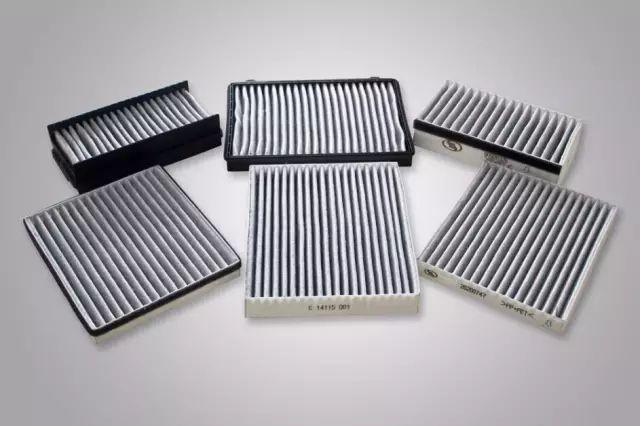
Modern AC filters are layered assemblies designed to balance particle capture efficiency with low airflow resistance. A typical residential or light-commercial unit contains three to five bonded interfaces:
- Filter media layer — spunbond nonwoven, fiberglass mat, or electrostatically charged polypropylene (PP) carrying an MERV 8–13 rating in most residential units and MERV 14–16 in commercial AHUs.
- Support grid or wire mesh — provides structural rigidity and prevents media collapse under high air velocity; bonded to the media perimeter with hot melt.
- Cardboard or plastic frame — the peripheral frame seals the panel against the filter slot and is bonded to the media stack along all four edges.
- Pleated media folds (if applicable) — in pleated filters, adhesive beads lock pleat spacing at both upstream and downstream faces to prevent pleat collapse.
- Gasket or foam seal — a perimeter foam strip bonded to the frame face creates an airtight installation seal, preventing bypass leakage around the filter edge.
Each bonding point has distinct requirements. Frame bonding demands high initial tack and gap-filling capability; pleat-lock beads require flexibility to withstand repeated air-pressure cycling; gasket bonding needs permanent adhesion to low-surface-energy foam.
Hot Melt Adhesive Bonding Requirements for AC Filters
AC filter adhesives must satisfy several overlapping performance demands that eliminate many general-purpose hot melt grades:
| Requirement | Typical Specification | Why It Matters |
|---|---|---|
| Service temperature (upper) | 80–100 °C (residential); up to 120 °C (commercial) | Prevents bond creep near compressor or in attic installations |
| Service temperature (lower) | -20 °C to -30 °C | Prevents embrittlement during cold transport or cold-climate storage |
| Low odor / VOC | <50 µg/m³ TVOC at 23 °C (EN 16516) | Filters contact recirculated indoor air; odor affects occupant comfort |
| Open time | 20–60 seconds (frame); 5–15 seconds (pleat bead) | Must align with assembly speed on automated production lines |
| Adhesion to PP nonwoven | Peel strength ≥ 3 N/25 mm | PP is a low-surface-energy substrate challenging for EVA-based adhesives |
| Flexibility (low-temp) | Mandrel bend without cracking at -20 °C | Prevents pleat-lock bead fracture during cold shipment |
| Color | Transparent or white | Avoids visible adhesive bleed-through on white filter media |
Temperature Range: The Most Critical Selection Parameter
The single most common cause of AC filter bonding failure is thermal mismatch — selecting an adhesive whose softening point is too low for the installation environment. Here is how the three main hot melt chemistries compare for air conditioning filter applications:
| Chemistry | Softening Point | Low-Temp Flexibility | VOC Level | PP Adhesion | Typical AC Filter Use |
|---|---|---|---|---|---|
| EVA (Ethylene-Vinyl Acetate) | 70–95 °C | Moderate (brittle below -15 °C) | Moderate (VA odor) | Fair | Economy residential filters; cardboard frame bonding |
| PO (Polyolefin) | 95–130 °C | Excellent (flexible to -30 °C) | Very low (near odorless) | Excellent | Premium residential, commercial, automotive cabin air filters |
| PA (Polyamide) | 130–165 °C | Good | Low | Good | High-temperature industrial air filters; commercial HVAC near heat exchangers |
For the majority of split-system and central-air residential filters, a polyolefin (PO) hot melt adhesive with a softening point of 105–120 °C offers the best balance of thermal headroom, low-odor performance, and excellent adhesion to polypropylene nonwoven media. EVA grades remain viable for economy products where service temperatures stay below 70 °C and cardboard frames (rather than PP frames) are used. Polyamide adhesives are reserved for industrial air-handling units where continuous service temperatures exceed 110 °C.
Recommended Adhesive Grades for AC Filter Production
Based on bonding point and application method, Devote recommends the following adhesive grades for air conditioning filter manufacturing:
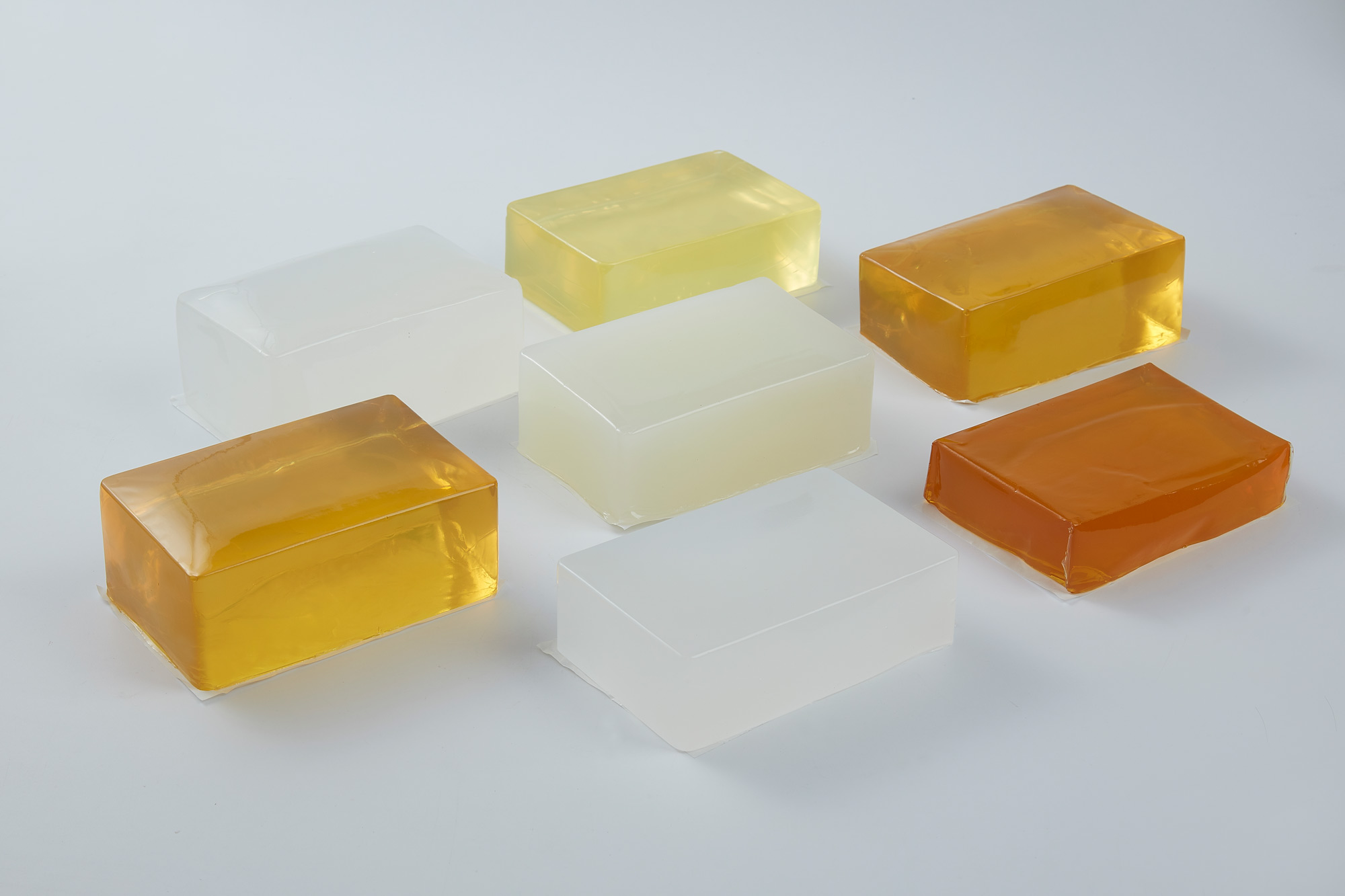
DV-PO-F Series (Polyolefin, Filtration Grade) — Viscosity 2,000–4,000 mPa·s at 180 °C; softening point 110–120 °C; open time 25–45 seconds. Ideal for frame bonding and media lamination on semi-automatic and fully-automated lines. Near-zero odor makes it suitable for residential indoor air applications.
DV-PO-P Series (Low-Viscosity PO, Pleat Lock) — Viscosity 800–1,500 mPa·s at 170 °C; short open time of 8–12 seconds; excellent bead consistency at high dispensing speeds. Designed for high-speed pleating machines running at 15–30 m/min where fast set is critical.
DV-EVA-F Series (EVA, Economy Frame Bonding) — Viscosity 1,500–3,000 mPa·s at 160 °C; softening point 80–90 °C; suitable for economy filter cardboard frames where upper service temperature does not exceed 70 °C.
DV-PA-H Series (Polyamide, High-Temp) — Softening point 145–155 °C; for industrial HVAC and commercial AHU filters exposed to sustained temperatures above 100 °C.
All Devote filter adhesives are manufactured under ISO 9001:2015 quality management systems and can be supplied with full TDS, MSDS, and RoHS/REACH compliance documentation. For OEM customers requiring private-label adhesive or custom viscosity grades, contact our technical team for formulation consultation.
Application Tips for AC Filter Production Lines
Even the best adhesive performs poorly if application parameters are not properly configured. Follow these guidelines to maximize bond reliability and minimize waste:
- Set tank temperature 10–15 °C above the adhesive’s recommended application temperature for consistent melt and to prevent cold-start clogs. For DV-PO-F, this means a tank temperature of 175–185 °C.
- Keep hose and nozzle temperatures matched to within ±5 °C of the tank. Temperature drops in the hose increase viscosity, causing inconsistent bead weight and poor coverage at the substrate.
- Purge the system before startup with a short pre-run of 30–60 seconds to clear any degraded adhesive from the previous production run, particularly if the system was left heated overnight.
- Optimize bead diameter for each bonding point: frame bonding typically uses a 3–6 mm bead; pleat-lock typically uses a 1–2 mm bead at 8–15 mm pleat pitch. Oversized beads waste adhesive and can cause bleed-through on thin nonwoven media.
- Conduct cold-temperature peel tests on finished panels at -20 °C to validate that the adhesive does not become brittle in low-temperature shipping conditions. A minimum peel strength of 3 N/25 mm at -20 °C is recommended.
- Store adhesive blocks or pillows in a dry environment below 35 °C, away from direct sunlight. Exposure to moisture or UV can degrade EVA adhesives and cause discoloration or reduced tack in PO grades.
Frequently Asked Questions
Can I use a standard EVA hot melt adhesive for all AC filter bonding points?
Standard EVA adhesives work adequately for cardboard frame bonding on economy residential filters where service temperatures remain below 70 °C. However, for polypropylene (PP) nonwoven media bonding, pleat-lock beads, or any application where the filter may be exposed to temperatures above 80 °C — such as in ducted return-air systems or attic air handlers — a polyolefin (PO) hot melt adhesive is strongly recommended. PO adhesives provide superior adhesion to PP substrates, higher softening points, and significantly lower odor, which is important for indoor air quality in occupied spaces.
What viscosity should I specify for an automated AC filter assembly line?
Viscosity selection depends on dispensing method and substrate porosity. For robotic bead application on frame bonding: 2,000–4,500 mPa·s at 180 °C provides good bead stability with low stringing. For slot-die or fine-bead pleat lock at high speeds: 800–1,500 mPa·s at 170 °C enables consistent thin-bead application at line speeds above 20 m/min. If your line operates at mixed speeds or uses a single applicator for multiple bonding points, request a viscosity curve (mPa·s vs. temperature) from your adhesive supplier and match it to your equipment’s operating window.
How do I prevent adhesive bleed-through on thin nonwoven filter media?
Adhesive bleed-through typically results from one or more of three causes: bead weight too high, application temperature too high (reducing viscosity and increasing wetting), or substrate basis weight too low relative to adhesive volume. Solutions include: reducing bead diameter by 0.5–1 mm, lowering application temperature by 5–10 °C (while staying within the adhesive’s recommended window), switching to a higher-viscosity grade with faster set speed, or specifying a higher basis-weight facing nonwoven. Devote can supply application-specific samples and conduct lab trials to identify the optimal combination for your substrate and line speed.
Partner with Devote for Your AC Filter Adhesive Needs
Devote is a Shenzhen-based hot melt adhesive manufacturer supplying filter producers across Asia, Europe, and the Americas. Our PO-based filtration adhesives are formulated specifically for polypropylene nonwoven substrates and validated against EN 779, ASHRAE 52.2, and ISO 16890 filter performance standards. We offer:
- Free technical samples with application recommendations
- Custom viscosity and open-time formulations for your production line
- Full documentation: TDS, MSDS, RoHS/REACH declarations, ISO 9001 certificate
- Minimum order quantity of 1,000 kg with FOB Yantian (Shenzhen) terms
Explore our full range of adhesive application solutions or visit our contact page to request samples, pricing, or a technical consultation. For further background on HVAC filter adhesive performance standards, the ASHRAE HVAC Systems and Equipment Handbook provides authoritative reference data on filter construction and testing.
Ready to upgrade your AC filter adhesive? Contact Devote today for a free sample and technical consultation tailored to your production line and filter specifications.