

Every packaging RFQ from a food brand or a converter asks for one document first: proof that the food contact hot melt adhesive meets FDA compliance rules. Then come RoHS 2.0 and REACH requests, and the file grows. This guide explains what each requirement actually covers, how to verify a supplier claim instead of trusting a logo, and which papers a serious adhesive factory can produce on request.
What Food-Contact Compliance Means for a Hot Melt Adhesive
A hot melt adhesive in food packaging rarely touches the food itself. It sits at carton seams, under bottle labels, or between laminate plies. Regulators still treat it as indirect food contact, because adhesive substances can migrate through thin substrates, along an exposed glue line, or at seams.
That is why the US rule is explicit. 21 CFR 175.105 governs adhesives used in packaging, transporting, or holding food, and requires the container to carry the statement “food-packaging adhesive” on its label. Compliance means the formula is built from permitted substances and used within defined contact limits, not that the glue itself is food.
FDA 21 CFR 175.105: The Rule Behind the Claim
The full text is public on the eCFR website. Three points matter for buyers:
- Dry foods. The adhesive quantity contacting packaged dry food must stay within good manufacturing practice limits.
- Fatty and aqueous foods. Contact is limited to trace amounts at seams and at edge exposure between laminates, and the seams must stay firmly bonded under normal use.
- Composition. The adhesive must be built from substances permitted under paragraph (c): GRAS substances, prior-sanctioned materials, and a long whitelist of named resins, waxes, and antioxidants.
A genuine claim cites 21 CFR 175.105 and names the exact grade. A vague “meets FDA standards” line without a grade name is a red flag, not a certificate.
How to Verify a Supplier FDA Compliance Claim
- Ask for the compliance letter citing 21 CFR 175.105, with the grade name and issue date.
- Cross-check the grade name on the letter against the TDS and the SDS. All three documents must match.
- Ask how the formula is qualified: listed substances under 175.105(c), or a Food Contact Notification in the FDA inventory.
- Request the label statement “food-packaging adhesive” or a photo of the container label.
- For sensitive laminates, order migration testing on the finished package, not just the raw adhesive.
Suppliers who hold real certificates send these within one working day. Suppliers who hesitate usually do not have them.
RoHS 2.0: Ten Restricted Substances That Matter in Adhesives
RoHS 2.0 (Directive 2011/65/EU as amended by 2015/863) restricts ten substance groups in electrical and electronic equipment: lead, mercury, cadmium, hexavalent chromium, PBB, PBDE, and the four phthalates DEHP, BBP, DBP, and DIBP. The threshold is 0.1% by weight in each homogeneous material, and 0.01% for cadmium.
Adhesives are not electrical products, but buyers still request RoHS 2.0 declarations: the restricted list is exactly the set of heavy metals and plasticizers nobody wants near food or workers. A declaration backed by IEC 62321 test reports proves the adhesive is free of these ten groups.
REACH SVHC: What European Buyers Check
REACH (EC 1907/2006) is the EU chemicals regulation, and its Candidate List of substances of very high concern (SVHC) reached 250 entries on 25 June 2025. When an article contains an SVHC above 0.1% by weight, the supplier must pass safe-use information down the supply chain under Article 33. Importers and producers can face notification duties when the substance exceeds one tonne per year, plus SCIP database notifications.
The practical ask for an adhesive: an SVHC statement dated against the current 250-entry list, plus a safety data sheet updated to match. That is the version that survives an audit.
Migration, Odor and Taste: Where Bonds Actually Fail
Compliance documents describe the formula. Migration describes what it does inside the package. Across EU-aligned specifications, overall migration is capped around 10 mg/dm² of contact surface. For adhesives, the classic risks are edge transfer at exposed glue lines, penetration through thin films, and odor or taste transfer into dry foods with high aroma uptake like tea, snacks, and powdered drinks.
Hot melt adhesives hold a structural advantage: they are 100% solids, so nothing evaporates after application. The remaining variables are formulation and process discipline, which is why buyers test the finished laminate at line temperature.
The Chinese Standards Context: GB 4806.1, GB 9685 and GB 15193.3
Buyers sourcing from China meet a parallel system. GB 4806.1 sets the general safety requirements for food contact materials: no release of harmful substances, no unacceptable changes to food composition or sensory properties, and production under good practice. GB 9685 lists the additives permitted in food contact materials and is the reference adhesive grades are screened against. GB 15193.3 belongs to the national toxicological test series used to evaluate substances that contact food.
A supplier working across all three can serve export markets and the domestic food industry from one production system. Ask which grades are screened against GB 9685 for China-bound packaging.
Reading about compliance is one thing. Seeing the documents is better. Send your packaging structure and target market, and we will return the full file, the FDA letter, RoHS 2.0 and REACH statements, GB 9685 screening, and free samples for a line trial.

A Supplier Audit Checklist You Can Copy
- Technical data sheet and safety data sheet, current version, grade name matching the compliance letter.
- FDA compliance letter citing 21 CFR 175.105 by section, naming the grade and its date.
- RoHS 2.0 declaration supported by IEC 62321 test reports from a third-party laboratory.
- REACH SVHC statement dated against the current Candidate List, with the SDS updated to match.
- GB 4806.1 and GB 9685 statements for China-bound or co-branded packaging.
- Migration and sensory test results on the finished laminate for fatty or aromatic foods.
- ISO 9001 certificate and batch traceability records.
- A sample policy that ships free samples with the documents, before payment.
For quick reference, the core file looks like this:
| Document | What it proves | Based on |
|---|---|---|
| FDA compliance letter | Qualified for indirect food contact | 21 CFR 175.105 |
| RoHS 2.0 declaration | No lead, cadmium, or phthalates above limits | 2011/65/EU + 2015/863, IEC 62321 |
| REACH SVHC statement | No SVHC above 0.1% w/w against the current list | EC 1907/2006, Candidate List (250 entries) |
| GB 9685 screening | Additives permitted for China food contact | GB 9685 |
| ISO 9001 certificate | Consistent production and traceability | ISO 9001 |
The Devote Food-Contact and Packaging Adhesive Line
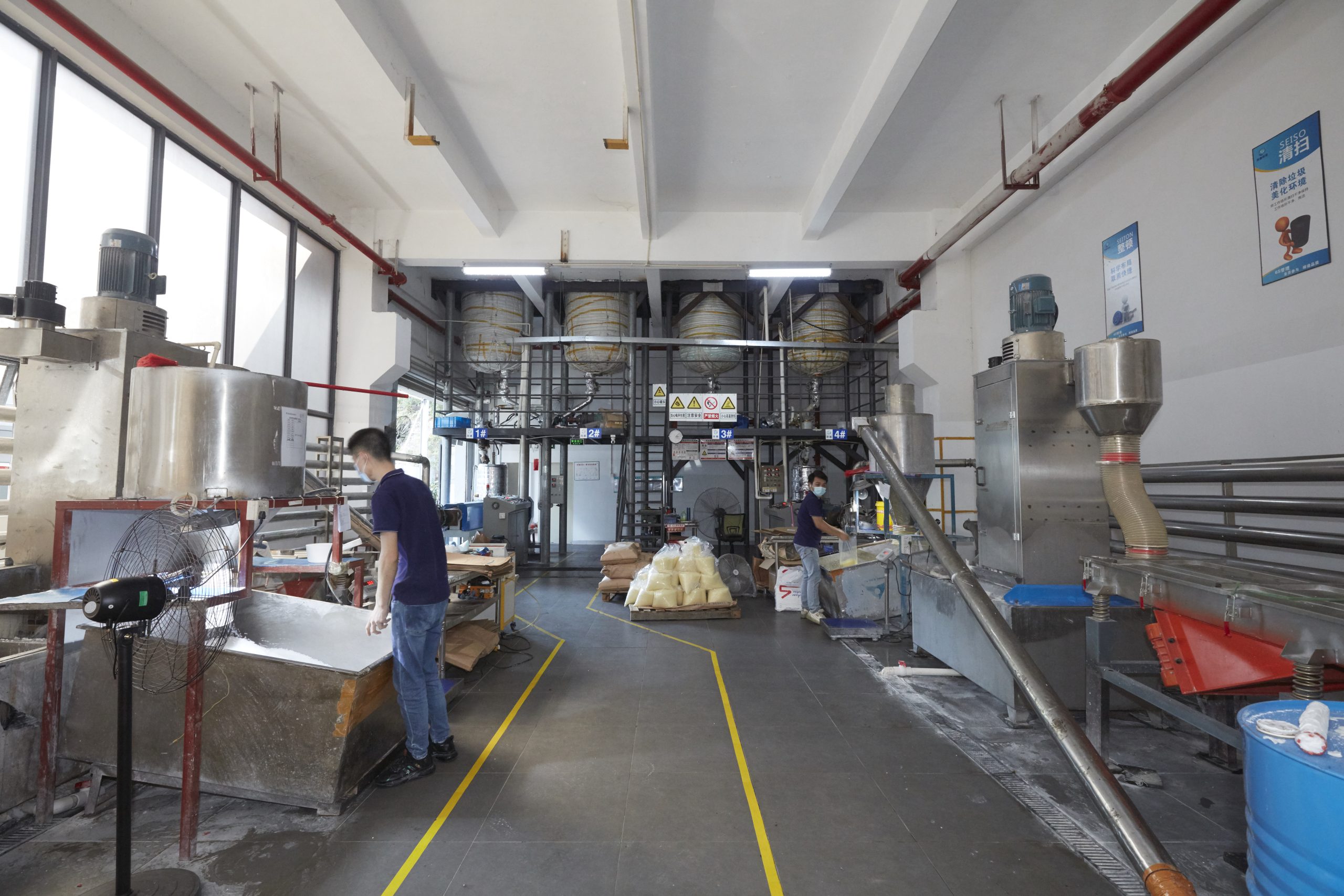
Devote (Shenzhen Tongde New Material Co., Ltd.) has produced hot melt adhesives in Shenzhen for 17 years, with an annual capacity of 10,000 tons and an ISO 9001 quality system. The flagship food-contact grade is 9025C, a pressure-sensitive hot melt adhesive carrying FDA food-contact compliance and RoHS 2.0 certification. Learn more about the factory on our about page.
Around it sits a packaging line for every bonding point in the food supply chain: 8088, a PO-based grade for bottle cap sealing; the 6409A / 6410M / 6412M series for straw bonding and aseptic cartons; and 9172A for PET bottle labeling, screened against GB 9685 and RoHS 2.0. The range is listed on the food packaging application page.
Related reading from this site:
- Read how our straw bonding hot melt glue performs in Tetra Pak and aseptic carton lines.
- For lab-side proof, follow the guide on how to test hot melt adhesive quality.
- Product details for the packaging-grade 1018C adhesive are on its product page.
Frequently Asked Questions
Does FDA compliance mean a hot melt adhesive can touch food directly?
No. Under 21 CFR 175.105, a compliant food-packaging adhesive works at seams and laminate edges. Contact is limited by good manufacturing practice for dry foods and to trace amounts for fatty and aqueous foods. Direct food contact requires a different regulatory route.
Which documents should I ask a supplier for first?
Start with the FDA compliance letter citing 21 CFR 175.105 and naming the grade, then the RoHS 2.0 declaration with IEC 62321 test reports, and a REACH SVHC statement dated against the current Candidate List of 250 entries. Together they cover a typical RFQ.
Does Devote offer a food-contact certified hot melt adhesive?
Yes. Devote 9025C, a pressure-sensitive grade, carries FDA food-contact compliance and RoHS 2.0 certification. For packaging lines, 8088, the 6409A/6410M/6412M series, and 9172A serve closures, straws, aseptic cartons, and PET labeling, with GB 9685 screening where required. Free samples ship together with the documents.

