

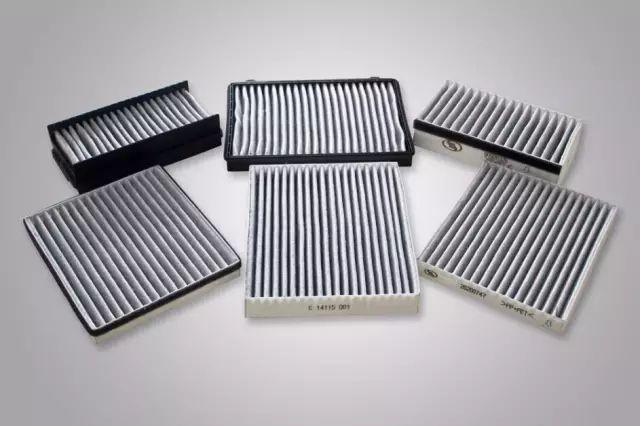
A cabin air filter that smells is a filter that comes back. Aftermarket distributors see it every season: filters where the activated carbon cloth has lifted away from the non-woven carrier, or where the glue line itself adds a chemical note to the cabin air. Both failures end the same way. A warranty claim is filed, a repeat order is lost, and the filter brand takes the blame. The root cause is usually the cabin air filter activated carbon adhesive.
This guide explains what a cabin air filter activated carbon adhesive must do on a modern assembly line. It covers the odor problem behind customer returns, the 1-2 second cure that keeps lamination lines moving, the -40 to 120°C thermal cycling inside a vehicle, and the IATF 16949 quality system behind every batch. Devote supplies two PO-based grades for this job: 3055W and 3031BQ.
It is written for filter plant owners, production managers, and purchasing teams serving the automotive aftermarket.
Why Activated Carbon Layers Fail — and Why Drivers Notice First
A cabin filter is a laminate. Activated carbon cloth sits between layers of non-woven fabric. The carbon traps odors and harmful gases. The non-woven layers carry the pleat structure and catch dust. The bond between them holds the whole sandwich together.
When the bond fails, three problems follow:
- Layer separation. Untreated air finds a shortcut around the carbon. Odor removal stops working while the filter still looks intact.
- Pleat collapse. Without firm bonding the media loses shape. Filter surface area drops and pressure across the filter rises.
- Noise and rattling. Loose media moves inside the housing. Drivers hear it and report a defect.
There is also a second failure source, and it is less obvious: the adhesive itself. A glue with high VOC output or strong fogging releases its own smell once the cabin heats up. Buyers judge a filter by smell, not by lab data. An odor-free bond line is the core spec for this product.
What a Cabin Air Filter Activated Carbon Adhesive Must Deliver
Five requirements separate an automotive grade from a general-purpose one:
- Near-zero odor and fogging. The glue line sits millimeters from the airflow path. Anything it releases reaches the driver.
- A 1-2 second set. Lamination and frame bonding run at line speed. Slow bonds force slow lines.
- Thermal cycling endurance. Filters cycle from about -40°C winter starts to 120°C heat soak behind the dashboard. The bond must flex through repeated expansion and contraction without cracking.
- Strength at low coat weight. Carbon cloth is delicate. Heavy glue lines stiffen the laminate and complicate pleating.
- Batch consistency. A plant qualifies a grade once. Every carton after that must bond the same way.
Devote 3055W and 3031BQ: PO Grades for Cabin Filter Assembly
Devote (Shenzhen Tongde New Material Co., Ltd.) formulates polyolefin (PO) hot melt adhesives for automotive filter assembly. Two grades cover the main bonding points on a cabin filter line.
3055W is a high-viscosity, low-VOC, fast-curing grade. It suits carbon cloth lamination and frame bonding where line speed matters. 3031BQ is a medium-viscosity, long-open-time grade with excellent low-odor and low-fogging behavior. It is designed for edge and side bonding of filter cartridges at medium and slow assembly speeds.
| Property | 3055W | 3031BQ |
|---|---|---|
| Base | Polyolefin (PO) | Polyolefin (PO) |
| Color and shape | White granule | White granule |
| Softening point | 140 ± 5°C (GB/T 15332) | 142 ± 10°C (ASTM D3461) |
| Viscosity at 180°C | 9000 ± 2000 cps (HG/T 3660) | 10500 ± 2000 cps (ASTM D3236) |
| Open time | – | 55–65 s |
| Setting time | 1–2 s | 3–6 s |
| Operating temperature | 170–210°C | 170–210°C |
| Packing | 25 kg bag | 25 kg bag |
| Storage | Below 40°C, dry and cool, 2 years | Below 40°C, dry and cool, 2 years |
All values come from the official Devote technical data sheets. Both grades feed directly into standard melt units as 25 kg bags.
A 1-2 Second Cure That Keeps High-Speed Lines Moving
With 3055W in the pot, the laminate is fixed the moment it leaves the nip. There is no waiting window, and the carbon cloth does not skew before the bond grabs. That single spec is what lets a fast lamination line run at its rated speed instead of being throttled back.
The fast set also helps frame bonding. The high viscosity keeps the bead where it is applied, even on vertical frame surfaces. One grade can serve both stations, with the melt unit set between 170 and 210°C.
Want these numbers checked against your own substrates? Fill in the form below. Our technical team replies within one working day with a sample plan for your line.

IATF 16949, RoHS and REACH: Compliance for Export Filters
Automotive customers audit differently from general industrial buyers. Devote runs its plant under an IATF 16949 quality system, the automotive-sector standard built on ISO 9001 with added requirements for traceability, defect prevention, and continuous improvement. The official scope of the standard is described on the IATF global oversight site.
Compliance paperwork travels with the product. Every batch ships with a technical data sheet and a safety data sheet. Raw materials comply with RoHS 2.0 and REACH requirements, which matters for filters supplied into European vehicle programs. The documents sit in the shipment file, ready for an audit.
Consistent Bond Strength, Filter After Filter
A qualified grade is only useful if the tenth carton bonds like the first. Devote controls this with narrow spec windows and lot traceability under the IATF 16949 system:
- Softening point held within ± 5°C on 3055W and ± 10°C on 3031BQ.
- Viscosity windows of ± 2000 cps at 180°C on both grades.
- FIFO raw material management and 2-year shelf life storage below 40°C.
That is what allows a purchasing team to qualify once and then order for years without re-validation on every shipment.
Where the Two Grades Fit in Filter Construction
On a typical cabin or air-conditioning filter, the two grades divide the work:
- 3055W for carbon cloth lamination and frame bonding on fast lines, with its 1-2 second set.
- 3031BQ for edge and side bonding of the cartridge, where the 55-65 second open time allows positioning before the 3-6 second set takes hold.
Related reading for filter plants:
- See the automotive air filter application page for bonding points across other filter types.
- Review the 3055W automobile air-conditioning filter page for the grade in its main working application.
- For a broader view of grade selection, read our guide on hot melt adhesive for automotive filters.
Test a Cabin Air Filter Activated Carbon Adhesive on Your Line
Devote ships free samples to the factory for line trials. Send us your substrate stack (non-woven grammage and carbon cloth type), your machine model, line speed, and tank temperature. We ship 3055W and 3031BQ samples with data sheets and recommended settings. Our engineers support the trial remotely.
Most filter plants complete a switch evaluation within two weeks. Learn more about the factory, its 17 years of hot melt production, and its 10,000-ton annual capacity on our about page.
Frequently Asked Questions
What adhesive bonds activated carbon cloth to non-woven fabric in cabin filters?
Polyolefin (PO) hot melt adhesives are the standard choice for this job. Devote 3055W sets in 1-2 seconds, holds through -40 to 120°C thermal cycling, and adds no odor or fogging to the airflow path. It is applied at 170-210°C from standard melt units.
Why does a brand-new cabin air filter still smell?
Two causes are common. First, a weak bond lets the carbon cloth separate, so untreated air bypasses the carbon. Second, an adhesive grade with high VOC or fogging releases its own smell inside the hot cabin. A low-odor, low-fogging grade such as 3031BQ removes the second cause.
What documents should a cabin filter adhesive supplier provide?
Ask for the IATF 16949 certificate scope, a technical data sheet, a safety data sheet, RoHS 2.0 and REACH compliance statements, and batch traceability records. A supplier serving automotive filter plants has these ready. Devote includes them with every shipment.
Related video: See the activated carbon cloth lamination process on the Devote YouTube channel for a real-time look at bonding speed and laminate handling.

