FilTech 2026 Preview: Hot Melt Adhesive Innovations for the Filtration Industry
The filtration industry is undergoing a fundamental shift. Tighter emissions regulations, growing demand for high-efficiency particulate air (HEPA) filters, and the push toward more sustainable manufacturing are all placing new pressure on the adhesives that hold filters together. At FilTech 2026 hot melt adhesive filtration innovation will be front and center — and Devote is arriving with solutions that address each of these challenges head-on. This preview covers the most important adhesive trends shaping filtration in 2026, what to expect from Devote at the show, and how manufacturers can start preparing today.
What Is FilTech and Why Does It Matter for Adhesive Buyers?
FilTech is the world’s leading trade fair dedicated entirely to filtration and separation technology. Held in Cologne, Germany, the biennial event brings together filter media producers, equipment manufacturers, end users, and raw material suppliers from over 40 countries. The 2026 edition — scheduled for March 24–26 at Koelnmesse — is expected to attract more than 350 exhibitors and 6,000 industry professionals, making it the definitive platform for previewing what is next in filter manufacturing.
For adhesive buyers and filter manufacturers, FilTech is not just a trade show; it is a working laboratory. Engineers gather at booths to compare viscosity data sheets, discuss temperature resistance requirements, and evaluate new formulations against their specific production line constraints. The conversations that happen at FilTech regularly determine sourcing decisions for the following two to four years.
Key Filtration Market Trends Driving Adhesive Innovation in 2026
Three macro-level trends are reshaping adhesive requirements across the filtration sector:
1. HEPA and ULPA Demand Is Surging
Global demand for HEPA filters grew at a compound annual rate of approximately 8.4% between 2021 and 2025, driven by post-pandemic air quality awareness, EV battery manufacturing cleanroom requirements, and increasingly stringent hospital and pharmaceutical facility standards. HEPA media — typically sub-micron glass fiber or melt-blown polypropylene — demands adhesives with exceptional low-bleed characteristics. Any adhesive migration into the media destroys filter efficiency ratings. This is pushing buyers toward polyolefin (PO) hot melt adhesives, which offer exceptionally clean melt behavior and minimal VOC release compared to traditional EVA formulations.
2. Thermal Cycling Performance Is Now a Baseline Requirement
Automotive cabin air filters, industrial gas turbine intake filters, and HVAC units in commercial buildings are all subjected to repeated thermal cycling — temperatures ranging from −30 °C winter starts to +90 °C under-hood peaks. Standard EVA hot melt adhesives begin to soften at approximately 60–70 °C, which is no longer adequate for these applications. The market is shifting toward polyamide (PA) hot melt adhesives with continuous service temperatures up to 150 °C, and toward modified PO grades engineered for wide thermal operating windows.
3. Sustainability Is Becoming a Specification, Not Just a Preference
Major European filter OEMs supplying automotive and HVAC markets are now requiring suppliers to document adhesive recyclability, VOC content (targeting <100 µg/g total), and compliance with REACH and RoHS directives. Solvent-free hot melt technology has always had a strong environmental baseline, but 2026 buyers are asking for more: formal Environmental Product Declarations (EPDs), bio-based content percentages, and end-of-life recyclability certifications. Manufacturers who cannot provide this documentation are increasingly being disqualified at the RFQ stage.
FilTech 2026 Hot Melt Adhesive Innovations to Watch
Based on conversations with filter engineers and adhesive formulators in the lead-up to the show, four categories of innovation are expected to draw the most interest on the FilTech 2026 floor:
- Ultra-low-bleed PO adhesives for HEPA media: New polyolefin grades with controlled molecular weight distribution designed to resist migration into glass fiber filter media at processing temperatures of 160–180 °C.
- High-Tg PA adhesives for automotive cabin air: Polyamide formulations with glass transition temperatures above 80 °C, enabling stable bonding through automotive thermal cycles without creep.
- Sprayable low-viscosity grades for pleated media: Adhesives with application viscosities below 2,000 mPa·s at 160 °C, enabling slot-die and fine-spray application on high-speed pleating lines running at 30+ meters per minute.
- Solvent-free edge sealing compounds: Replacing traditional polyurethane-based sealants in filter frame assembly with thermoplastic alternatives that are fully recyclable and eliminate isocyanate exposure risks for workers.
Devote at FilTech 2026: What Filtration Engineers Can Expect
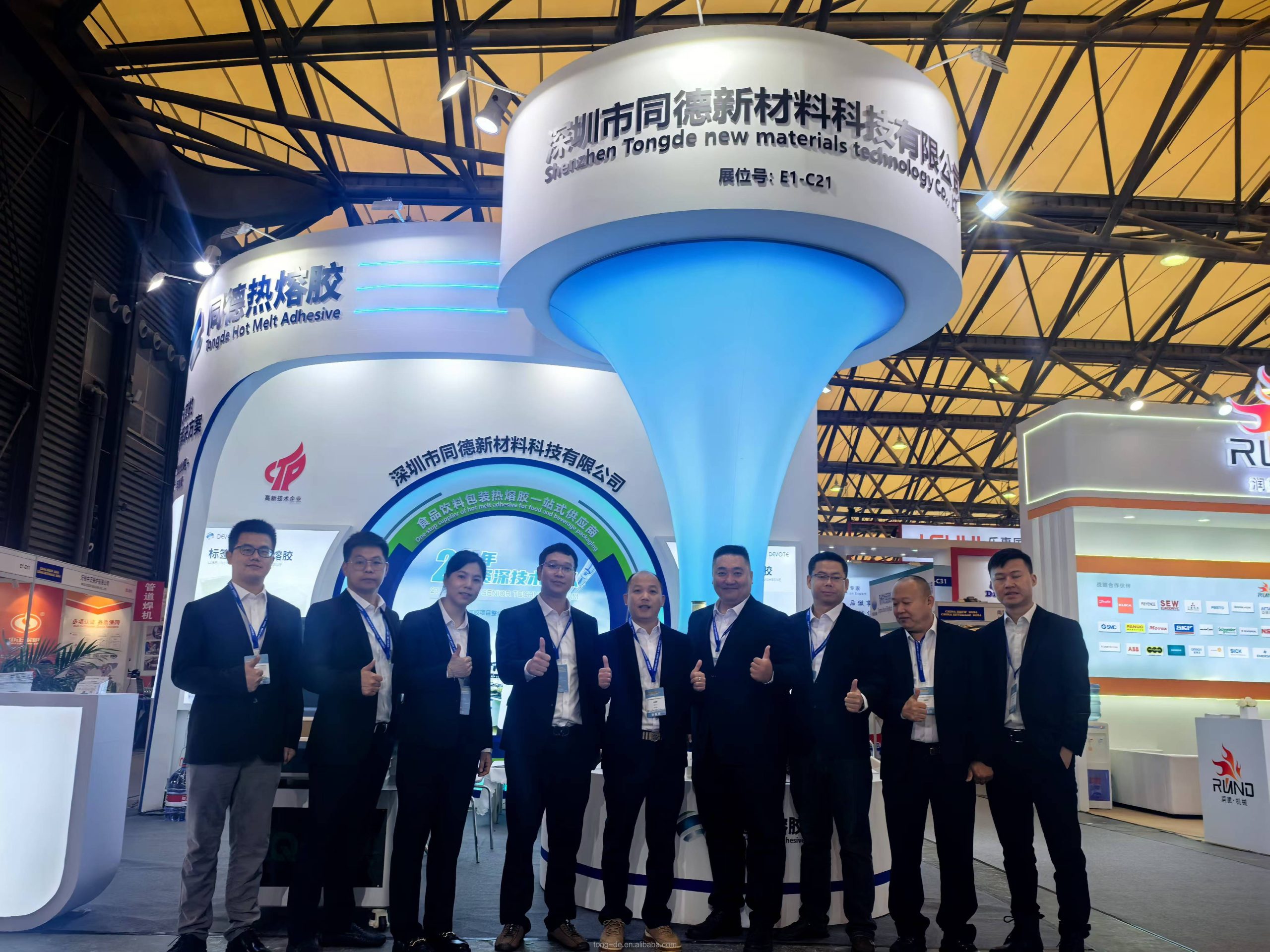
Devote is a Shenzhen-based hot melt adhesive manufacturer with over a decade of specialization in filtration-grade adhesives. The company holds ISO 9001:2015 certification and supplies adhesive products to filter manufacturers across Asia, Europe, and North America. At FilTech 2026, Devote’s focus will be on demonstrating performance data for three product families:
| Product Family | Base Chemistry | Application Temperature | Key Use Case |
|---|---|---|---|
| DV-PO Series | Polyolefin (PO) | 160–180 °C | HEPA and ULPA filter media bonding |
| DV-PA Series | Polyamide (PA) | 190–220 °C | Automotive cabin air, high-temp industrial filters |
| DV-EVA-F Series | Modified EVA | 150–170 °C | General-purpose pleated and panel filters |
All three series are available in pellet, block, and pillow pack formats to accommodate a wide range of melting equipment. Devote’s technical team will be on hand to discuss viscosity curves, open time optimization, and equipment compatibility — the three most common pain points reported by filtration engineers switching adhesive suppliers.
Adhesive Performance Data That Matters: What to Ask Suppliers at the Show
Walking the FilTech floor with a shortlist of adhesive questions will save weeks of back-and-forth sampling. Here are the five data points that consistently separate high-performance filtration adhesives from generic formulations:
- Viscosity at application temperature (mPa·s): Should be tested at your actual processing temperature, not at 180 °C if you run at 165 °C. Ask for the full viscosity-temperature curve.
- Open time range (seconds): Critical for pleating speed. Too short and bonds form before the media is pressed; too long and the production line slows.
- Heat resistance (softening point, °C): Measured by Ring and Ball method per ASTM E28. For automotive applications, require a minimum of 95 °C.
- VOC content (µg/g): Ask for test results at your application temperature. Some adhesives that appear clean at room temperature off-gas significantly during processing.
- Media compatibility data: Verify bond strength on your specific filter media substrates — glass fiber, PET nonwoven, and PP melt-blown all respond differently to the same adhesive.
Pre-Show Meeting Booking: How to Get the Most from FilTech
The FilTech floor is busy, and meaningful technical conversations are difficult without a scheduled appointment. Devote recommends reaching out at least two weeks before the show to share your application brief — media type, production speed, operating temperature range, and current pain points. This allows the technical team to prepare specific data and, where applicable, bring physical samples to the meeting.
For companies unable to attend FilTech 2026 in person, Devote offers a parallel online consultation track running during the same dates. Remote participants receive the same technical documentation and have access to the same engineering team via video call.
Explore Devote’s full range of filtration adhesive solutions at the application overview page, or contact our team directly to request product data sheets and schedule a pre-FilTech technical consultation.
Frequently Asked Questions
What types of filters require hot melt adhesive?
Hot melt adhesives are used across virtually all pleated filter types: HEPA and ULPA room air filters, automotive cabin air filters, engine intake air filters, HVAC panel and bag filters, industrial dust collector cartridges, and liquid filtration housings. The adhesive is used to bond filter media to frames, seal pleated media edges, and laminate multiple media layers. The specific chemistry required — EVA, PO, or PA — depends on the operating temperature, the substrate chemistry, and any applicable regulatory requirements.
Why is polyolefin adhesive preferred for HEPA filter bonding?
Polyolefin (PO) hot melt adhesives are preferred for HEPA bonding for three reasons. First, they exhibit significantly lower migration tendency than EVA, reducing the risk of adhesive contamination of the filter media. Second, PO adhesives are inherently cleaner in terms of VOC emissions at processing temperatures. Third, modern PO formulations can be applied at 160–180 °C with viscosities low enough for fine-spray application, allowing precise adhesive placement on delicate glass fiber media without saturation. These properties combine to make PO the preferred chemistry for Grade H13 and H14 HEPA applications.
How do I request samples from Devote before or after FilTech 2026?
Samples can be requested directly through the Devote contact page. Please include your filter media type, required application temperature, production line speed, and any specific certifications or compliance requirements. The technical team typically responds with a sample recommendation within one to two business days. For FilTech 2026 attendees, samples and data sheets can also be collected directly at the Devote booth.
Ready to Explore Filtration Adhesive Solutions with Devote?
Whether you are preparing for FilTech 2026, sourcing for a new production line, or troubleshooting adhesion issues on existing filters, Devote’s engineering team is ready to help. With over a decade of filtration-specific adhesive development, ISO 9001:2015 certification, and production capacity to support global supply requirements, Devote is the partner serious filter manufacturers trust. Contact us today to request technical data sheets, initiate a sample trial, or book a pre-show consultation — and let’s ensure your filter bonding performs exactly as your specifications demand.