

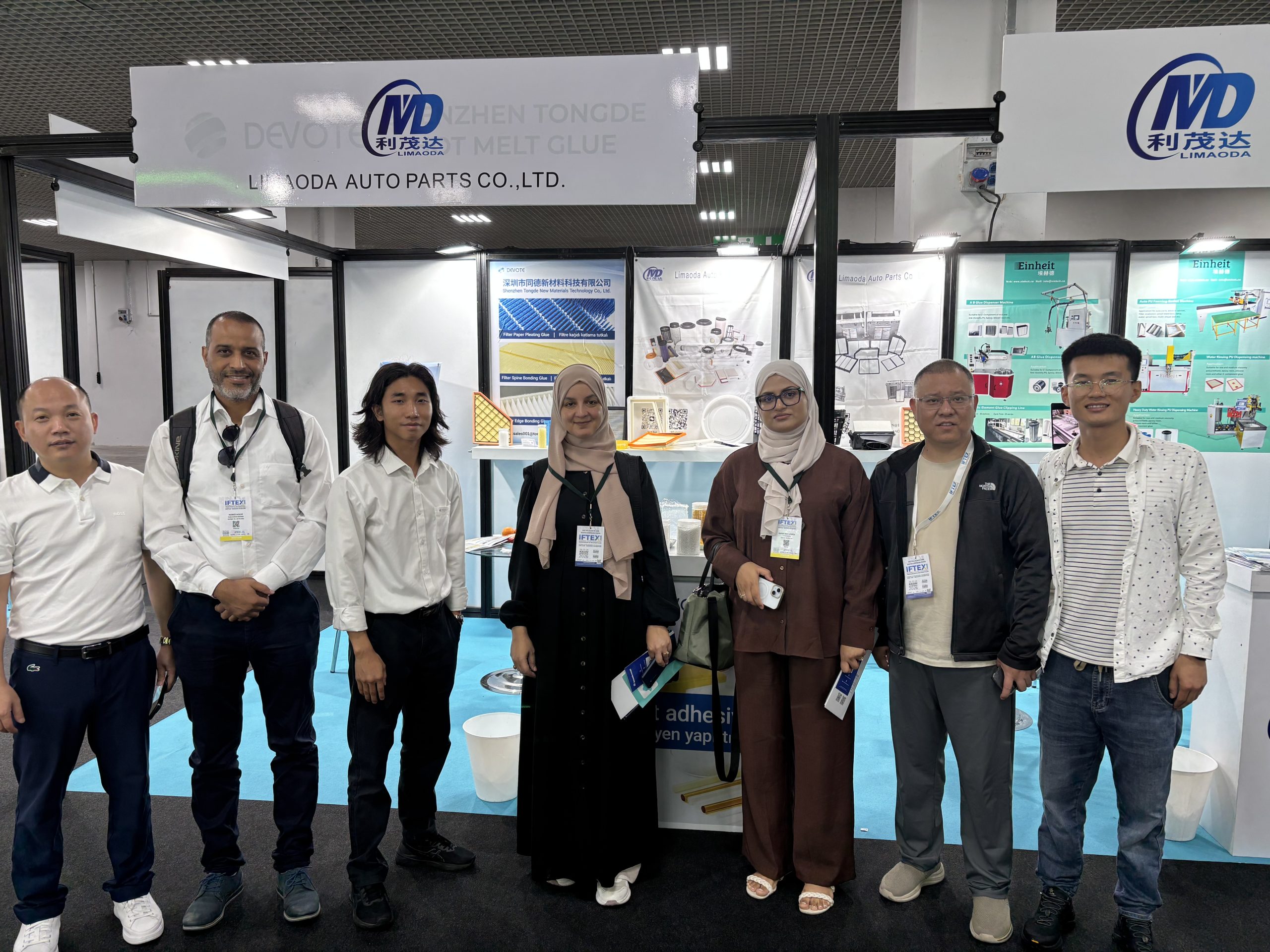
FilTech 2026 hot melt adhesive filtration innovation took center stage in Cologne this summer, bringing together more than 450 exhibitors and over 14,000 visitors from 70 countries. For filtration engineers and procurement managers, the event offered a clear snapshot of where bonding technology is heading: faster line speeds, lower VOC emissions, and tighter compatibility with recycled filter media. At Devote, we returned from the show with fresh insights into how modern hot melt adhesives are solving these exact challenges on production floors worldwide.
In this article, we summarize the key trends that defined FilTech 2026, highlight the adhesive breakthroughs that caught buyers’ attention, and explain how Devote’s latest formulations align with the new demands of the filtration industry.
What Is FilTech and Why It Matters for Filtration Professionals
FilTech is the world’s leading trade fair dedicated to filtration and separation technology. Held every 18 months in Cologne, Germany, it serves as the global meeting point for filter manufacturers, raw material suppliers, and equipment builders. For the hot melt adhesive sector, FilTech is especially important because pleating, frame sealing, and end-cap bonding remain some of the most critical—and most scrutinized—steps in filter assembly.
Buyers who walked the halls this year were not just looking for lower prices. They were asking tougher questions about thermal stability, low-odor formulations, and compliance with REACH and FDA food-contact standards. These priorities are reshaping R&D roadmaps from Shenzhen to Stuttgart.
Three Filtration Trends That Defined 2026
Based on dozens of conversations at the Devote booth and across the exhibition floor, three trends stood out:
- Recyclable filter constructions: Major OEMs are redesigning HVAC and automotive filters so that paper, plastic frames, and adhesives can be separated at end-of-life. This shift puts pressure on adhesive suppliers to deliver bonds that perform for 10+ years but do not contaminate recycling streams.
- Mini-pleat and high-count pleat designs: Modern HEPA and ULPA filters often pack 300+ pleats into a single cartridge. The adhesive bead must be precise, consistent, and free of stringing, or line rejects spike above 3 percent.
- Temperature extremes in electric vehicles: With EV battery packs running hotter than conventional engine bays, cabin air filters now face operating windows from -40 C to +90 C. Adhesives that soften at 80 C are no longer acceptable for under-hood or battery-compartment applications.
Hot Melt Adhesive Innovations Buyers Asked About Most
At FilTech 2026, visitors to the Devote booth consistently requested information on four adhesive performance areas:
1. Low-VOC and low-odor EVA and PO grades. Indoor air quality regulations in Germany, France, and California now limit total VOC emissions from finished filters. Devote’s 3025B low-odor formulation and 3031BX low-volatility grade were specifically developed to meet these thresholds without sacrificing open time or bond strength.
2. High-temperature PA adhesives for industrial filtration. Baghouse and dust-collection filters operating above 150 C need polyamide-based hot melts that resist thermal degradation. Our P19 PA grade maintains structural integrity at continuous service temperatures up to 160 C, making it suitable for cement, steel, and power-generation filter applications.
3. Fast-setting grades for high-speed pleaters. A single automotive cabin-filter line can produce 1,200 units per hour. Any adhesive with an open time above 4 seconds becomes a bottleneck. Devote 8082 series EVA adhesives set in 1-3 seconds at 160 C, allowing manufacturers to maintain throughput without adding glue stations.
4. FDA-compliant formulations for food and beverage filtration. Beverage membranes and edible-oil filters require adhesives that meet FDA 21 CFR 175.105 indirect food-contact rules. Devote 9025C has been tested against these standards and is already used by dairy and brewing filter makers in Europe and Southeast Asia.
For a broader view of how hot melt adhesives fit into different filter types, see our applications overview.
Devote at FilTech 2026: Shenzhen Meets Cologne
This was Devote’s fifth appearance at FilTech, and the response confirmed a trend we have observed for three years: Chinese hot melt adhesive manufacturers are no longer viewed as low-cost alternatives alone. Buyers from Germany, Turkey, Brazil, and the United States came to the booth with detailed technical questionnaires—meting out adhesion strength data, thermal-aging curves, and supply-chain audit requirements.
We conducted live bonding demonstrations using pleated filter paper and polypropylene frames, showing how our 3052 high-temperature-resistant adhesive performs under simulated 150 C aging. The visual comparison against a standard EVA benchmark drew consistent crowds and led to 23 formal sample requests during the three-day show.

What to Expect from Devote in the Next Filtration Cycle
FilTech 2026 reinforced our belief that filtration adhesive buyers want three things: data transparency, application support, and supply security. Here is how we are responding:
- Expanded TDS library: Every filtration-grade adhesive now ships with a full technical data sheet including viscosity curves, shear-strength decay at temperature, and compatibility matrices for common filter media.
- Sample kits for filter OEMs: We now offer structured trial packs (EVA, PO, and PA) so R&D teams can test three chemistries side-by-side on their own pleating equipment.
- 10-day lead time from Shenzhen: With MOQs starting at 1,000 kg and FOB Shenzhen-Yantian as the default terms, we maintain stock for high-runner grades and can air-fuel urgent sample shipments within 72 hours.
If you are evaluating a new adhesive for an upcoming filter program, we recommend reading the official FilTech Europa website for the next exhibition dates and technical conference agendas.
Frequently Asked Questions
What is the best hot melt adhesive for high-temperature industrial filters?
For continuous operating temperatures above 140 C, polyamide (PA) hot melt adhesives are the preferred choice. Devote P19 offers heat resistance up to 160 C and is already used in baghouse and dust-collection filters across cement and steel plants. Always verify the peak temperature profile of your application before selecting a grade.
How do low-VOC hot melt adhesives improve indoor air quality?
Standard EVA hot melts can release trace aldehydes and acetates during application and curing. Low-VOC formulations such as Devote 3025B and 3031BX use refined raw materials and stricter degassing protocols, reducing total emissions by 60-80 percent compared with conventional grades. This makes them suitable for cabin-air filters, medical filtration, and any building where occupants are sensitive to chemical odors.
Can Chinese hot melt adhesives meet European automotive filter standards?
Yes. Devote holds ISO 9001 and IATF 16949 certifications, and our automotive filter adhesives are tested against OEM specifications for shear strength, thermal aging, and vibration resistance. We have supplied Tier-1 and Tier-2 filter manufacturers in Europe, Russia, and Turkey since 2018, with full lot traceability and COFC documentation available on request.
Ready to Upgrade Your Filter Assembly Adhesive?
FilTech 2026 showed that filtration buyers are raising their technical bar. Whether you need a low-odor grade for cabin-air filters, a high-temperature PA for industrial baghouses, or a fast-setting EVA for high-speed pleating lines, Devote has a validated solution. Learn more about our company or get in touch to request samples and TDS sheets tailored to your program.

