Hot Melt Glue Sticks: Ultimate Buyer’s Guide for Industrial and DIY Use
Hot melt glue sticks are the most widely used form factor for thermoplastic adhesives delivered through glue guns and automated hot melt dispensing systems. Selecting the right hot melt glue sticks for industrial buyer requirements — or even for professional DIY applications — involves understanding diameter compatibility, temperature ratings, base polymer chemistry, and open time characteristics. This guide breaks down every critical variable so procurement managers, production engineers, and facility buyers can make an informed decision before placing an order.
Glue Stick Diameters: Matching the Stick to Your Equipment
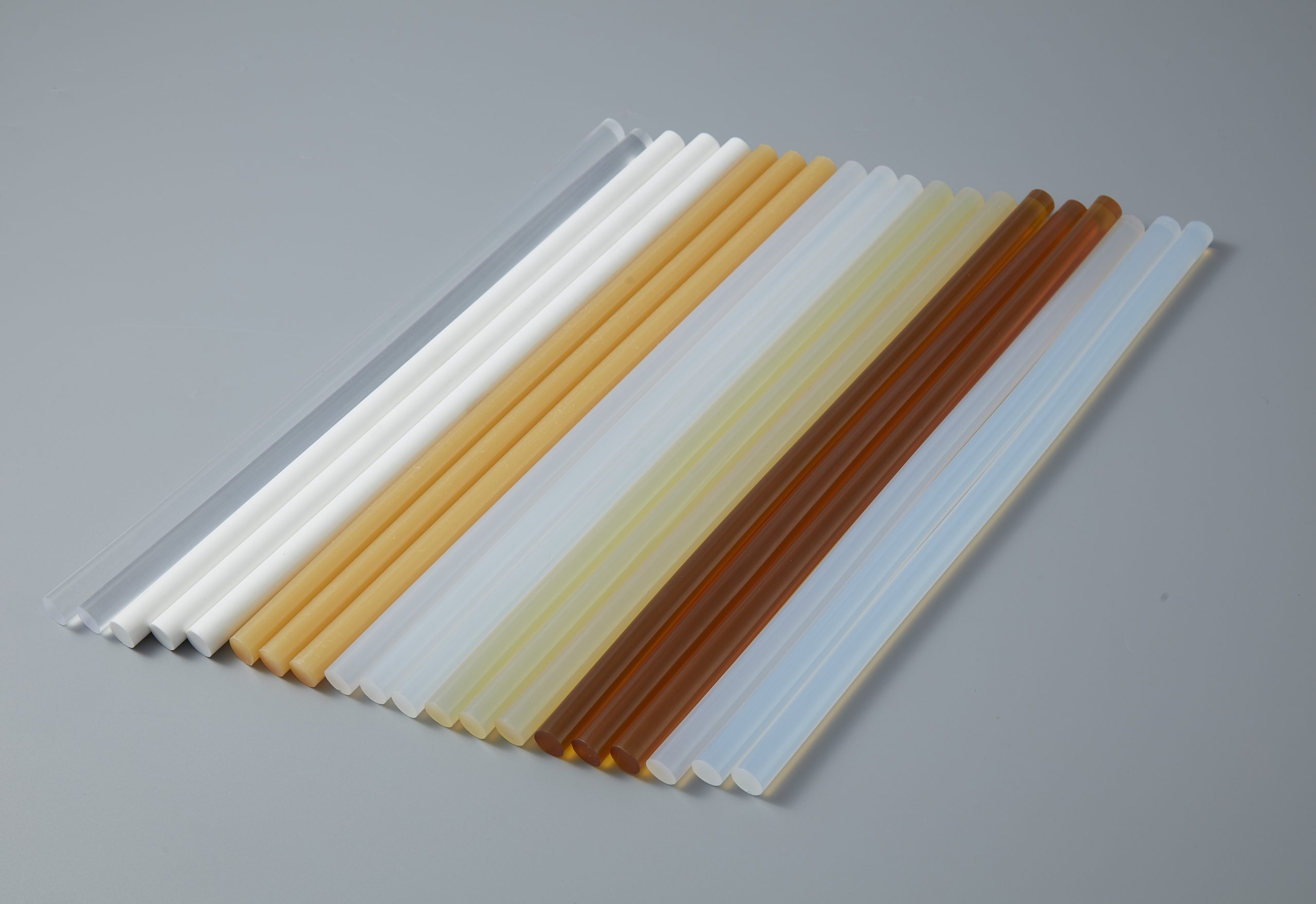
Hot melt glue sticks are manufactured in several standard diameters, and using the wrong diameter in a glue gun will result in feed failures, slippage, or equipment damage. The most common diameters in commercial and industrial use are:
- 7 mm (0.27 in) — The standard for light-duty consumer and craft glue guns. Wall thickness is minimal, and flow rate is low; suitable for card crafts, floral arrangements, and lightweight assembly tasks. Not recommended for continuous industrial use.
- 11–12 mm (0.43–0.47 in) — The most common diameter for semi-industrial and professional glue guns with wattages between 40 W and 100 W. This diameter provides a balance between flow rate and compatibility with a broad range of glue gun brands.
- 15–16 mm (0.59–0.63 in) — Used in high-output industrial glue guns and benchtop dispensing units. These sticks hold more adhesive mass, reducing the frequency of stick changes during continuous production runs.
- 43 mm (1.69 in) — Large-format sticks for industrial tank-fed systems and high-volume assembly lines. Often used in furniture edge banding, woodworking, and packaging applications where adhesive throughput is high.
Always verify the diameter specification of your glue gun or dispensing system before purchasing. Many industrial glue guns have a tolerance of ±0.3 mm; sticks near the outer tolerance of a diameter range may feed inconsistently on certain equipment models.
Temperature Ratings: Low-Temp vs. High-Temp Hot Melt Glue Sticks
Hot melt glue sticks are broadly classified into low-temperature and high-temperature grades, which determines which type of glue gun they require and what substrates they can bond effectively.
Low-temperature sticks melt between 120 °C and 135 °C. They are formulated for heat-sensitive substrates such as foam, thin polypropylene film, floral materials, and delicate fabrics. The lower viscosity at application temperature means lower clamping pressure is needed, but bond strength is generally lower than high-temperature grades. Low-temp sticks are widely used in electronics cable management, craft and floral industries, and prototype packaging.
High-temperature sticks operate at 170 °C to 200 °C. They deliver stronger bonds, higher shear strength, and better heat resistance in the finished bond. This makes them the preferred choice for wood, metal, ceramic, leather, and structural plastic assemblies. In industrial production environments, high-temperature sticks are standard for furniture manufacturing, automotive part assembly, and general-purpose packaging operations.
According to industry usage data, approximately 65% of industrial glue stick consumption is in the high-temperature category, reflecting the dominance of woodworking, furniture, and packaging applications in overall hot melt glue stick demand.
Adhesive Chemistries Available in Stick Form
Not all hot melt glue sticks contain the same polymer chemistry. Understanding the base polymer determines the bond characteristics, substrate compatibility, and environmental performance of the finished joint.
- EVA (Ethylene Vinyl Acetate) — The most common chemistry for general-purpose and DIY glue sticks. EVA sticks offer excellent adhesion to paper, cardboard, wood, fabric, and many plastics. They are cost-effective and widely available. Limitations include relatively low heat resistance (bond softens above 60–70 °C) and moderate flexibility. VA content in the stick formulation (typically 18–28%) affects tack and flexibility.
- Polyolefin (PO) — Higher-performance sticks based on metallocene polyolefin or amorphous poly-alpha-olefin (APAO) resins. PO sticks offer superior heat resistance (service temperature up to 90–110 °C), better low-temperature flexibility, and excellent adhesion to polyolefin substrates (PP and PE). Used in automotive component assembly, HVAC filter manufacturing, and hygiene product components. PO sticks typically cost 20–40% more than comparable EVA grades.
- Polyamide (PA) — High-temperature hot melt glue sticks based on polyamide resins, designed for demanding industrial applications requiring bond integrity up to 150–180 °C. PA sticks are used in electronics encapsulation, metal bonding, and automotive sensor attachment. They require specialty high-temperature guns operating at 220–250 °C.
- Reactive PUR (Polyurethane) — Moisture-curing reactive hot melt available in cartridge or pellet form. Not available in traditional stick format due to moisture sensitivity, but functionally serves similar roles in woodworking and panel bonding where maximum bond strength and water resistance are needed.
Industrial vs. DIY Hot Melt Glue Sticks: Key Differences
The distinction between industrial-grade and DIY-grade hot melt glue sticks goes beyond marketing. There are meaningful technical differences that affect production quality and total cost of ownership.
Raw material quality and consistency: Industrial glue sticks are produced with tightly controlled polymer molecular weight distribution and additive packages, resulting in batch-to-batch consistency in viscosity, open time, and color. DIY sticks often use broader-spec resin grades that can cause variable flow behavior on production equipment.
Dimensional tolerances: Industrial-grade sticks are manufactured to diameter tolerances of ±0.1 mm, ensuring consistent feed in automated dispensing systems. Loose tolerances in consumer sticks can cause slippage and gun blockages during high-speed production runs.
Char resistance and pot life: High-quality industrial sticks are formulated with antioxidant stabilizers that prevent thermal degradation and char formation during extended dwell times in the glue gun reservoir. Consumer sticks are typically not stabilized for extended heated dwell, leading to viscosity increase and char buildup that can block nozzles.
Packaging and traceability: Industrial sticks are packaged in cartons or bags sized for production use (typically 10–25 kg), with lot numbers and technical data sheets for quality control documentation. Consumer retail packs (typically 50–200 g) lack this traceability infrastructure.
Industrial Glue Stick Buying Checklist
Before finalizing a hot melt glue stick purchase for industrial or professional use, verify the following parameters with your supplier:
- Stick diameter and length — Confirm exact diameter (in mm) and standard stick length (10 cm, 20 cm, 30 cm, or custom) match your equipment specifications.
- Application temperature — Request the recommended application temperature range and confirm it is compatible with your gun or dispensing system operating range.
- Softening point (Ring & Ball, ASTM E28) — This determines the upper service temperature of the bond. For bonds exposed to direct sunlight or warm ambient conditions, specify a softening point of at least 85 °C.
- Viscosity at application temperature (mPa·s) — Must match the nozzle orifice size and pump capacity of your dispensing system. Request viscosity data at 150 °C, 170 °C, and 190 °C for comparison.
- Open time — Verify that the open time (the window for bonding after application) is appropriate for your assembly speed. Open times range from under 5 seconds for fast-set grades to over 60 seconds for slow-set grades.
- Substrate compatibility testing — Request adhesion test data on your specific substrates, or request samples for in-house validation testing before committing to large volumes.
- Regulatory and safety documentation — Obtain current Safety Data Sheets (SDS) and confirm compliance with relevant regulations (REACH, RoHS, food-contact standards if applicable).
For detailed guidance on matching adhesive grades to specific industrial applications, explore our complete application library, which covers filtration, automotive, hygiene, packaging, and furniture manufacturing use cases.
Devote Hot Melt Glue Stick Range
Devote manufactures a comprehensive range of hot melt adhesive sticks at our ISO 9001-certified facility in Shenzhen, China. Our glue stick portfolio covers the full spectrum of industrial and professional applications:
- General-Purpose EVA Sticks — Available in 11 mm, 12 mm, and 15 mm diameters; high-temperature grade (180–190 °C application); excellent adhesion to wood, paper, cardboard, and most plastics; widely used in packaging, crafts, and light assembly
- High-Performance PO Sticks — Polyolefin-based formulas for demanding applications requiring superior heat and cold resistance; recommended for automotive components, HVAC filters, and outdoor applications; available in 12 mm and 15 mm diameters
- Flexible Low-Temp Sticks — EVA-based low-temperature formula (120–135 °C) for heat-sensitive substrates; available in 7 mm and 11 mm for both consumer and professional low-temp glue guns
- Industrial High-Melt-Point Sticks — Formulated for high-temperature bond service requirements; softening point above 90 °C; suitable for furniture assembly, automotive interior components, and structural panel bonding
All Devote glue stick grades are supported by technical data sheets, SDS documentation, and our application engineering team’s guidance on equipment selection and process optimization. The Adhesive and Sealant Council’s technical resources (adhesives.org) also provide useful reference data for buyers evaluating hot melt adhesive specifications.
Frequently Asked Questions
Can I use any glue stick in my glue gun?
No. The stick diameter must match the glue gun’s feed chamber. Using a stick that is too narrow will cause slippage and inconsistent feeding; a stick that is too wide may jam the gun or prevent insertion entirely. Additionally, the gun must be rated for the application temperature of the stick — a low-temperature gun cannot melt high-temperature sticks adequately, resulting in poor bond quality. Always verify diameter (in mm) and temperature rating before purchasing sticks for a specific gun model.
What is the difference between EVA and polyolefin hot melt glue sticks?
EVA (ethylene vinyl acetate) sticks are the standard general-purpose choice — cost-effective, widely compatible, and available for most glue gun types. Polyolefin (PO) sticks offer significantly better heat resistance, lower-temperature flexibility, and stronger adhesion to difficult substrates like polypropylene and polyethylene. PO sticks are the preferred choice for automotive, HVAC, and outdoor applications where bonds may be exposed to temperature extremes or UV radiation. For most general bonding tasks, EVA is the practical choice; for demanding industrial specifications, PO is worth the higher unit cost.
How do I calculate how many glue sticks I need for production?
Start with the adhesive consumption per unit (in grams), which your adhesive supplier or process engineer can help you estimate from bond area, bead size, and coverage rate. Multiply by daily production volume to get daily adhesive consumption in grams. Convert to sticks by dividing by the stick weight (a standard 11 mm x 200 mm stick weighs approximately 25–30 g; a 15 mm x 200 mm stick weighs approximately 50–60 g). Add 10–15% buffer for waste, purge, and test shots. For very high-volume applications, consider switching to pillow-pack pellets or jumbo sticks to reduce handling frequency and lower per-kg cost.
Get Expert Guidance on Your Glue Stick Selection
Choosing the right hot melt glue sticks for industrial buyer requirements does not have to be complicated when you have the right partner. Devote’s technical sales team can review your application parameters, recommend the appropriate chemistry and diameter, and arrange product samples for in-house testing — with typical sample dispatch within 5 business days.
Whether you are standardizing your adhesive supply chain, upgrading from consumer-grade to industrial sticks, or evaluating polyolefin grades for a new product line, Devote has the product range and technical support to help you get it right.
Contact Devote today to speak with an adhesive specialist and request samples for your specific equipment and application. Our team responds within one business day.