

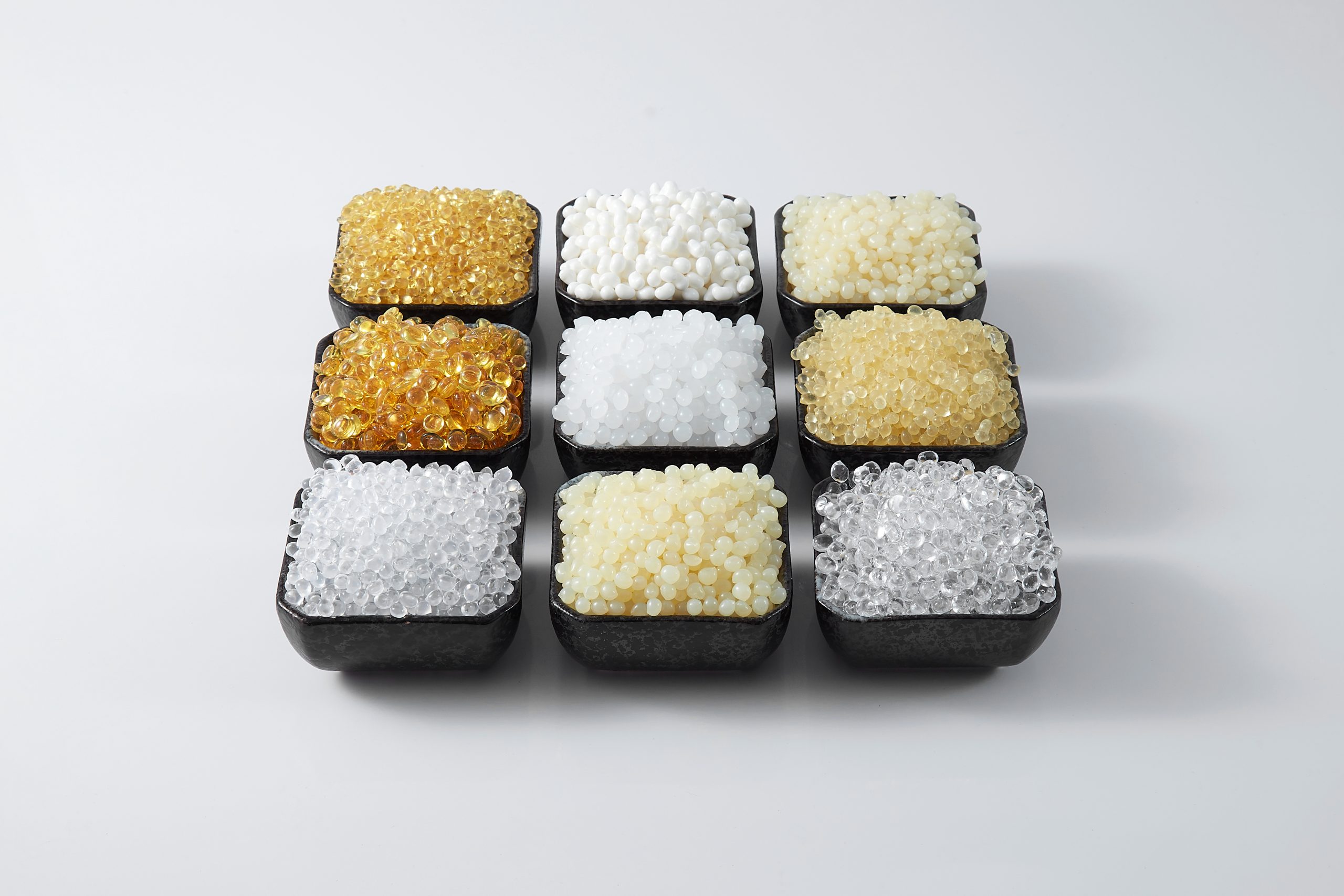
If you manufacture packaging, filters, furniture, or hygiene products, you likely depend on adhesives every day. But what is hot melt adhesive, and why has it become the dominant bonding choice across so many industries? Hot melt adhesive is a 100-percent solid thermoplastic compound that melts when heated, flows onto a surface, and forms a strong bond within seconds as it cools. Unlike solvent-based or water-based adhesives, it contains no carrier liquid. That means zero drying time, zero VOC emissions, and minimal energy consumption. This guide explains the definition, working mechanism, major types, advantages, and buying criteria so industrial procurement teams can make informed decisions.
What Is Hot Melt Adhesive? Definition and Core Mechanism
Hot melt adhesive (HMA) is a thermoplastic formulation supplied in pellet, block, pillow, or stick form. At room temperature it is solid and inert. When heated to its application temperature, typically between 120 and 200 degrees Celsius, it becomes a viscous liquid that wets the substrate surface. Upon cooling, it solidifies and develops structural bond strength. The entire cycle, from melt to set, often takes 1 to 5 seconds. This speed makes hot melt adhesive ideal for high-volume automated production lines.
The global hot melt adhesive market reached USD 9.5 billion in 2024 and is projected to grow at 5.2 percent CAGR through 2030. Packaging accounts for roughly 35 percent of total demand, followed by hygiene products at 18 percent and automotive assemblies at 12 percent. These figures underline why understanding what hot melt adhesive is matters for anyone involved in industrial procurement.
How Hot Melt Adhesive Works: From Solid to Bond
The bonding mechanism of hot melt adhesive involves three distinct phases. First, the adhesive is heated in a melting tank or hopper until it reaches its operating viscosity. Second, it is dispensed through nozzles, slot dies, or wheels onto the substrate. Third, the substrates are pressed together while the adhesive cools and solidifies, creating a mechanical and chemical bond.
Several variables affect bond quality. Application temperature controls viscosity and wetting. Open time, the window during which the adhesive remains tacky enough to bond, ranges from 1 second for fast-set packaging grades to 30 seconds for assembly grades. Substrate temperature also matters. If the substrate is too cold, the adhesive skins over before wetting occurs. If it is too hot, the adhesive may flow out of the bond line. Proper equipment calibration is essential for consistent results.
Key Types of Hot Melt Adhesive
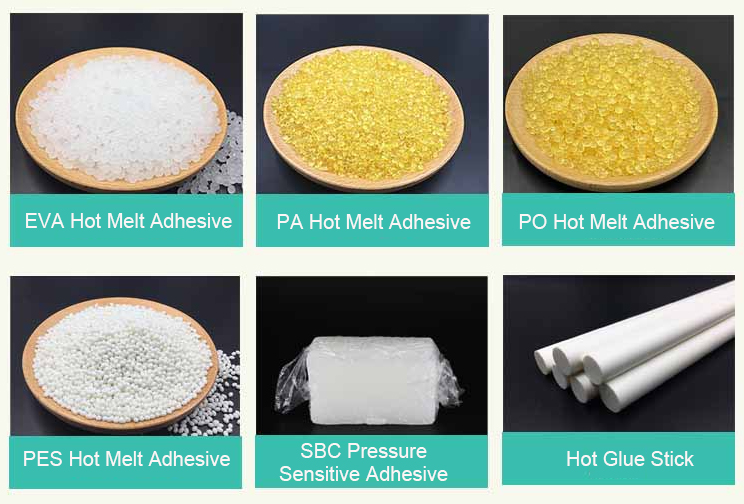
Industrial hot melt adhesives fall into five primary polymer families. Each family offers distinct performance characteristics, cost profiles, and application suitability.
- EVA (Ethylene Vinyl Acetate): The most widely used and cost-effective HMA type. EVA adhesives offer excellent adhesion to paper, wood, and porous substrates. They serve carton sealing, bookbinding, and packaging. Application temperatures range from 150 to 180 degrees Celsius. Explore Devote’s EVA hot melt adhesive range for packaging and general bonding.
- Polyolefin (PO): Known for superior heat resistance and low-temperature flexibility. PO adhesives bond well to plastics and metals. They resist oxidation and charring better than EVA. PO grades typically cost 20 to 40 percent more than EVA but deliver longer pot life and cleaner running. See Devote’s polyolefin hot melt adhesive products.
- Polyamide (PA): Engineered for high-temperature resistance up to 150 degrees Celsius continuous service. PA adhesives bond metals, electronics, and automotive components. They offer excellent chemical resistance but require precise temperature control during application. Learn more about polyamide hot melt adhesive for demanding environments.
- Polyester (PES): Specialized for textile lamination, footwear, and filtration. PES adhesives provide outstanding wash resistance and flexibility. They are also used in automotive cabin filter assembly where pleat retention is critical.
- Pressure Sensitive Adhesive (PSA): A subset of HMA that remains permanently tacky after cooling. PSA hot melts are used for labels, tapes, mattress assembly, and hygiene products. They allow repositionable bonds and flexible substrate bonding.
Advantages of Hot Melt Adhesive in Industrial Production
Hot melt adhesive offers several operational advantages over solvent-based and water-based alternatives:
- Instant bonding: Setting occurs in 1 to 5 seconds. This enables line speeds exceeding 300 meters per minute on packaging equipment.
- Zero VOC emissions: HMA contains no solvents or water. It meets stringent indoor air quality regulations including REACH and RoHS.
- Energy efficiency: No drying ovens are needed. A typical hot melt line consumes 60 to 80 percent less energy than a solvent-based equivalent.
- Compact footprint: Melting and dispensing equipment occupies a fraction of the floor space required by drying tunnels.
- Indefinite shelf life: Properly stored HMA in sealed packaging lasts 12 to 24 months without degradation. No special climate control is needed beyond avoiding temperatures above 40 degrees Celsius.
- Material versatility: Modern HMA formulations bond paper, plastic, metal, wood, textile, and foam substrates. Multi-substrate bonding reduces the number of adhesives a factory must inventory.

Common Industrial Applications
Hot melt adhesive serves a broad spectrum of industries. In packaging, it seals cartons, erects cases, and applies labels at speeds up to 60,000 units per hour. In filtration, it bonds pleated paper, secures end caps, and seals gaskets in automotive and HVAC air filters. Furniture manufacturers use HMA for edge banding, profile wrapping, and veneer bonding. The hygiene sector relies on PSA hot melts for diaper construction, elastic attachment, and sanitary napkin assembly at line speeds exceeding 800 pieces per minute. Bookbinding operations use fast-setting EVA grades for spine gluing and side gluing. Each application demands specific viscosity, open time, and heat resistance profiles.
For a comprehensive overview of how Devote adhesives serve these sectors, visit our applications page. For specific product data sheets and technical specifications, our team provides detailed TDS documents upon request.
Buying Guide: What Industrial Buyers Should Evaluate
Selecting the right hot melt adhesive requires evaluating six key factors:
- Substrate compatibility: Verify the adhesive bonds your specific materials. Request lab tests on your actual substrates rather than generic data sheets. Surface energy, porosity, and coating all affect adhesion.
- Application temperature range: Confirm your equipment can maintain the required temperature within plus or minus 5 degrees Celsius. EVA grades typically need 160 to 180 degrees Celsius. PA grades may require 190 to 210 degrees Celsius.
- Open time and set speed: Match these to your line speed. Fast-set grades with 1 to 2 second open time suit high-speed carton sealers. Longer open times of 10 to 30 seconds suit manual assembly or large-area bonding.
- Heat and chemical resistance: Determine the service temperature of the finished product. EVA grades typically withstand 70 degrees Celsius. PO grades handle 100 degrees Celsius. PA grades endure up to 150 degrees Celsius continuous.
- Certifications: For automotive, verify IATF 16949 compliance. For food contact, check FDA or GB 4806 certification. For EU shipments, confirm REACH registration. The Adhesive and Sealant Council provides industry guidance on compliance standards.
- Total cost of ownership: Look beyond price per kilogram. Factor in consumption rate (grams per unit), energy costs, downtime from charring or clogging, and waste from stringing or over-application. A higher-priced PO grade that runs 30 percent longer without maintenance often costs less per unit than a cheaper EVA.
Frequently Asked Questions
What is hot melt adhesive made of?
Hot melt adhesive consists of three main components. A base polymer (EVA, PO, PA, PES, or SBC) provides structural strength and adhesion. A tackifier resin (rosin ester, hydrocarbon, or terpene) increases initial grab and surface wetting. A wax or plasticizer adjusts viscosity, open time, and set speed. Additives such as antioxidants, UV stabilizers, and pigments may be included for specific performance requirements. The exact formulation depends on the target application and performance specifications.
What temperature does hot melt adhesive apply at?
Application temperatures vary by polymer type. EVA hot melt adhesives typically apply at 150 to 180 degrees Celsius. Polyolefin grades run at 160 to 190 degrees Celsius. Polyamide grades require 180 to 210 degrees Celsius. PSA hot melts operate at 140 to 170 degrees Celsius. Always verify the manufacturer’s recommended range on the technical data sheet. Exceeding the recommended temperature causes thermal degradation, charring, and bond failure. Running below the range increases viscosity, causing poor wetting and inconsistent bead formation.
How long does hot melt adhesive take to set?
Setting time depends on the formulation and substrate. Fast-set packaging grades bond in 1 to 3 seconds. General-purpose EVA adhesives set in 3 to 8 seconds. Assembly and construction grades may allow 15 to 30 seconds of open time before setting. Cooling rate is influenced by substrate mass and ambient temperature. Heavier metal substrates draw heat faster, shortening set time. Pre-heated or insulated substrates extend open time. For most automated lines, the adhesive achieves handling strength within 10 seconds and full strength within 2 minutes.
Partner With Devote for Your Hot Melt Adhesive Needs
Understanding what hot melt adhesive is forms the foundation of smart procurement. The right adhesive improves line efficiency, reduces waste, and ensures product reliability. Devote, based in Shenzhen, China, manufactures EVA, PO, PA, PES, and PSA hot melt adhesives for filtration, automotive, packaging, hygiene, and furniture industries. The company holds ISO 9001, REACH, and IATF 16949 certifications. Every batch undergoes rheology testing and full-lot traceability before release. Learn more about Devote and our commitment to adhesive quality.
Whether you are specifying adhesive for a new product line or evaluating alternatives to your current supplier, our technical team is ready to help. Send us your substrate for benchmark testing, request a data sheet, or ask about equivalent grades for Western brands. Contact Devote today for a no-obligation consultation.

