

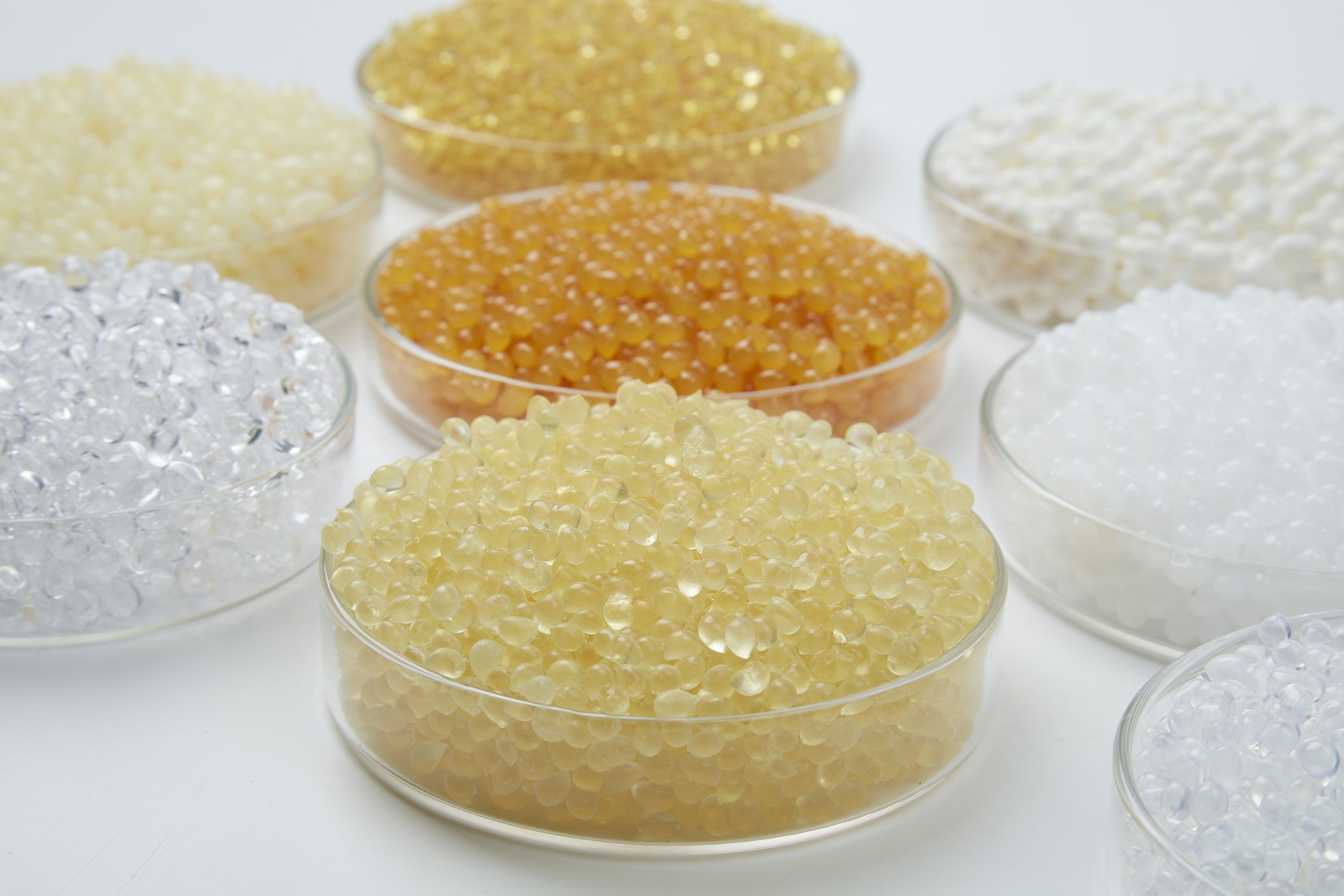
Ask for a polyamide hot melt adhesive high temperature datasheet and three numbers appear before anything else. They are softening point, melt viscosity and setting time. Those three numbers decide whether the bond survives its working life. Choose by price or brand name alone and the risks add up fast. Think creep inside a hot enclosure, charring in the glue pot, or a setting time too slow for the line. This guide explains what each value means and shows real data from four Devote PA grades. It closes with a five-step qualification checklist. Devote (Shenzhen Tongde New Material Co., Ltd.) has manufactured hot melt adhesives in Shenzhen for 17 years. Annual capacity is 10,000 tons.
Why Ordinary Hot Melts Fail When the Heat Rises
Standard EVA hot melts do excellent work in packaging and book binding. Their softening points sit between roughly 70 and 100°C. Push the bonded part beyond that ceiling and two failure modes appear. First, creep: under a constant load the adhesive film slowly flows, and the joint drifts out of position. Second, re-softening: every time the part warms up, the bond weakens again. Add contact with oils or fuels, which swell EVA, and the joint can lose strength without any visible warning.
Polyamide (PA) hot melt adhesives attack the problem at the molecular level. Amide linkages and a higher polymer weight push softening points to 150-195°C in Devote’s range. The same chemistry resists oils, greases and many solvents. That is why PA grades dominate underhood and filter assembly work.
The Three Numbers in a Polyamide Hot Melt Adhesive Spec Sheet
Every PA datasheet follows the same logic. Learn to read the three core values and most selection questions answer themselves.
- Softening point (ring-and-ball, GB/T 15332). The temperature where the adhesive loses its load-bearing stiffness. Treat it as the ceiling for service temperature, not as the setpoint on your machine.
- Melt viscosity at 200°C (Brookfield, HG/T 3660 or GB/T 2794). This value controls pumping, wetting and stringing. Devote’s PA grades sit between 2,200 and 3,000 cps, a window that suits spraying, bead extrusion and roller coating.
- Setting time (Devote test method). How fast the bond builds green strength. One to three seconds is the normal range, and it sets your maximum line speed.
A practical rule of thumb: keep the continuous service temperature at least 30-50°C below the softening point. That margin absorbs thermal cycling, sustained load and occasional excursions above the rated temperature.
Real Specifications from Devote’s PA Range
Devote produces a ladder of PA grades whose softening points step from 150°C to 195°C. The data below comes from the official technical data sheets.
| Grade | PA150 | 3058G | P180 | P19 |
|---|---|---|---|---|
| Base | PA | PA | PA | PA |
| Color / shape | Yellow rod, 11.0±0.3 mm | Yellow granule | Yellow granule | Yellow granule |
| Softening point | 150±5°C (GB/T 15332) | 155±5°C (GB/T 15332) | 180±5°C (GB/T 15332) | 195±5°C (GB/T 15332) |
| Viscosity | 3,000±1,000 cps at 200°C (HG/T 3660) | 3,000±500 cps at 200°C (HG/T 3660) | 2,200±600 cps at 200°C (GB/T 2794) | 2,600±600 cps at 200°C (HG/T 3660) |
| Setting time | 1-2 s | 1-3 s | 1-2 s | 1-2 s |
| Application temperature | 200-220°C | 200-220°C | Tank 210-230°C | 210-230°C |
| Packing | 25 kg carton | 25 kg bag | 25 kg bag | 25 kg bag |
All four grades store for two years below 40°C in a dry, cool place. Grade 3058G carries documented compliance with the EU REACH regulation and the RoHS 2.0 directive. PA150 is documented against RoHS 2.0. Note the format choice too. PA150 is supplied as a rod for hand guns and rework stations. The granule grades feed automatic melt units.
Matching Polyamide Adhesive Specs to High Temperature Service
The grade numbers track their softening points, which makes selection straightforward:
- Cabin electronics, sensors and consumer devices (service up to about 85°C): PA150 or 3058G, with a fast set for automated dispensing.
- Underhood assemblies near 110-130°C: P180, with a 180°C softening point and bead or strip application.
- Hot-oil zones such as oil filter end caps (service up to about 150°C): P19 at 195°C softening, with the best heat and solvent resistance in the range.
Thermal cycling matters as much as peak temperature. Automotive and electronics qualification programs run change-of-temperature tests per IEC 60068-2-14. In those tests parts swing between extremes such as -40°C and +125°C. A bond sized only for steady heat can still fail in cycling. That is exactly what the 30-50°C margin protects against.
Where PA Adhesives Earn Their Keep
Electronics assembly uses PA adhesives wherever solder is too hot and epoxy too slow. Coil and wire tacking on dispensing robots exploits the 1-2 second set. The robot moves on before the next component lands. Component fixing and strain relief hold parts through shipping vibration and through processes adjacent to reflow. For bench work and repair, PA150 rod feeds a standard hand gun.
Automotive and filtration lines rely on PA for pleat and spine bonding. In automotive air filter assembly, the adhesive fixes pleat tips and bonds the cartridge spine in one pass. Oil filter end caps use P19 where hot oil attacks ordinary chemistry. Adhesion to filter paper, metal caps and engineering plastics holds through heat, oil and solvent exposure. The full PA range with technical data sheets sits on the polyamide hot melt adhesive product page.

Polyamide or Polyester for High-Temperature Bonding?
PA and PES (polyester) both work above 120°C, and buyers often ask which to trial. The split is by substrate and environment, not by quality. Polyamide wins on rigid, hot, oily parts: metal fittings, engineering plastics, filter media and electronics. Polyester wins on flexible and washable goods such as textiles, nonwovens and footwear. There a soft bond line and laundering resistance matter more than peak temperature. Devote supplies both chemistries, and the polyester hot melt adhesive range covers the textile side.
A Five-Step Qualification Checklist Before You Buy
- Write down the maximum continuous service temperature, the dwell time at that temperature, and any peak excursion. Guessing here causes most field failures.
- List every substrate in the joint, including oils, plasticizers and release agents on the surface.
- Check viscosity against your equipment. Devote’s PA grades run 2,200-3,000 cps at 200°C, which suits standard gear pumps, nozzles and hand guns.
- Run accelerated tests. Heat-age at the maximum service temperature, then thermal cycling such as IEC 60068-2-14 Test N.
- Pilot 20-25 kg on the real line and score adhesion, stringing, open time and odor. Our guide on how to test hot melt adhesive quality walks through the full check.
Frequently Asked Questions
What temperature can polyamide hot melt adhesive withstand?
Devote’s PA grades soften between 150°C (PA150) and 195°C (P19). Continuous service temperature should stay 30-50°C below the softening point. So P19 suits parts that see about 150°C in service. For short excursions above the softening point, expect the bond to relax rather than fail instantly.
Why choose polyamide instead of EVA for underhood parts?
EVA softens between roughly 70 and 100°C and swells in oils and fuels. A PA grade such as P180 holds stiffness to a 180°C softening point and resists automotive fluids. It still sets in 1-2 seconds for line speed. The price per kilogram is higher. The field-failure rate is not.
Do polyamide hot melt adhesives come in stick form?
Yes. PA150 is supplied as a yellow rod, 11.0±0.3 mm in diameter, packed in 25 kg cartons. It sets in 1-2 seconds at 200-220°C and fits standard hand guns. That makes it popular for wire tacking, rework and low-volume assembly.
Devote (Shenzhen Tongde New Material Co., Ltd.) manufactures EVA, PO, PA and PSA hot melt adhesives in Shenzhen. Quality systems are certified to ISO 9001 and IATF 16949. REACH documentation is available for grades such as 3058G. Tell us your service temperature, substrates and line speed. Our engineers will recommend a grade and send free samples for a line trial. More on our factory and certifications is on the about page.

