Eco-Friendly Hot Melt Adhesives: VOC-Free Solutions for Green Manufacturing
The shift toward sustainable manufacturing has moved from boardroom aspiration to regulatory requirement. For factories relying on bonding technologies, eco-friendly hot melt adhesive VOC-free formulations are emerging as the clearest path forward — eliminating solvent emissions without compromising on bond strength or production speed. This guide breaks down the environmental drivers, available formulations, key certifications, and practical performance data to help procurement and engineering teams make informed decisions.
Why VOC Emissions in Adhesives Are Under Scrutiny
Volatile organic compounds (VOCs) are carbon-based chemicals that evaporate readily at room temperature and contribute to ground-level ozone formation, indoor air quality degradation, and long-term worker health risks. Solvent-based adhesives — once the industry default — can contain up to 60–80% solvent by weight, releasing significant VOC loads during application and drying.
Regulatory pressure is accelerating globally:
- European Union: The Industrial Emissions Directive (IED 2010/75/EU) and its successor the IED Recast (2024) impose strict VOC emission limits on coating and adhesive processes, with thresholds as low as 10 g/m² for some surface applications.
- United States: EPA NESHAP regulations govern VOC emissions in packaging printing and converting operations. Many US states (California, New York) enforce stricter local rules.
- China: GB 37822-2019 sets VOC emission concentration limits for coating, printing, and bonding processes, affecting factories exporting to markets with extended producer responsibility frameworks.
Beyond compliance, major consumer brands — including IKEA, Unilever, and Procter & Gamble — now audit their tier-1 and tier-2 suppliers for VOC reduction as part of Scope 3 emissions targets, creating downstream pressure throughout the supply chain.
How Eco-Friendly Hot Melt Adhesives Eliminate VOC Concerns
Hot melt adhesives are inherently 100% solids — they contain no water and no solvents. This fundamental characteristic makes them the most VOC-free adhesive technology commercially available at industrial scale. When applied correctly with properly calibrated equipment, hot melt adhesives emit no solvents and generate no hazardous air pollutants (HAPs) during the bonding process.
However, “eco-friendly” in the hot melt category goes beyond just zero VOCs. Genuinely sustainable formulations must also address:
- Raw material origin: Renewable or bio-based feedstocks reduce dependence on fossil-derived polymers.
- Recyclability: Adhesives used in packaging must be compatible with established recycling streams.
- Energy consumption: Lower application temperatures directly reduce energy use and carbon footprint per unit produced.
- Pot life and charring: Formulations with longer thermal stability reduce adhesive waste and degradation by-product emissions.
Green Adhesive Formulation Types: A Comparison
Not all hot melt chemistries are equal from an environmental standpoint. The table below compares the most common types across key sustainability and performance criteria:
| Chemistry | VOC Emissions | Recyclability | Min. Application Temp. | Bio-based Option | Typical Applications |
|---|---|---|---|---|---|
| EVA (Ethylene-Vinyl Acetate) | Zero VOC | Moderate — vinyl acetate content reduces recyclability in some streams | 160–180°C | Limited | Packaging, bookbinding, light construction |
| PO (Polyolefin / APAO) | Zero VOC | Excellent — chemically compatible with PE/PP recycling streams | 150–175°C | Emerging bio-polyolefin grades | Filtration, hygiene, flexible packaging, automotive |
| PA (Polyamide) | Zero VOC | Moderate — separated at high-temp sorting, but complex polymers | 170–220°C | Castor-oil derived PA grades available | Electronics, automotive, high-temp industrial |
| PES (Polyester) | Zero VOC | Good — polyester fraction is recoverable in textile recycling | 140–175°C | Partially bio-based available | Textile lamination, footwear, nonwovens |
| PSA (Pressure Sensitive) | Zero VOC (if HM-PSA) | Challenging — aggressive tack interferes with recycling machinery | 130–160°C | Limited | Labels, tapes, medical |
Among these, polyolefin (PO) hot melt adhesives offer the strongest overall environmental profile. Their hydrocarbon backbone is chemically identical to the polyethylene and polypropylene used in most packaging substrates, meaning recyclers do not need to separate the adhesive from the substrate in many applications.
Key Environmental Certifications to Look For
When sourcing eco-friendly hot melt adhesives, certifications provide objective verification of environmental claims. Here are the most relevant:
- REACH (EU Regulation 1907/2006): Ensures all chemical substances in the adhesive are registered and do not contain substances of very high concern (SVHC) above threshold concentrations. Essential for any product sold into European markets.
- RoHS (Restriction of Hazardous Substances): Relevant for adhesives used in electronics assembly — restricts lead, mercury, cadmium, and other hazardous materials.
- RecyClass / APR Design Guide: These packaging recyclability schemes evaluate whether adhesive formulations are compatible with PP/PE/PET recycling streams. Approval unlocks access to major retailer sustainable packaging programmes.
- EU Ecolabel: A voluntary scheme that certifies products meeting stringent lifecycle environmental criteria, including adhesive raw material sourcing and VOC content.
- ISO 14001 (Environmental Management System): Applies to the manufacturer’s production facility rather than the product itself, but is a strong proxy for consistent environmental practice.
- Cradle to Cradle (C2C): A product-level certification assessing material health, recyclability, renewable energy use, water stewardship, and social fairness throughout the lifecycle.
According to a 2024 survey by FEICA (Association of the European Adhesive and Sealant Industry), 74% of adhesive buyers in Europe now require at least one environmental certification as part of supplier qualification, up from 48% in 2020. This trend is rapidly extending to buyers in North America and Southeast Asia.
Performance vs. Sustainability: Breaking the Trade-Off Myth
A persistent concern among manufacturing engineers is that switching to greener adhesives will compromise bond performance, particularly at temperature extremes or high production speeds. Data from independent testing and Devote’s own application trials challenges this assumption.
Devote’s polyolefin-based hot melt adhesive (Devote 8088) delivers:
- Viscosity: 1,000 ± 300 cps at 170°C — consistent flow performance suitable for high-speed automated lines
- Open time: 45–55 seconds — extended positioning window without sacrificing cycle time
- Set time: 1–2 seconds — rapid fixture for high-throughput production
- Application temperature range: 150–180°C — 10–20°C lower than equivalent EVA grades, reducing energy consumption by an estimated 8–12% per shift
- Thermal stability: No char formation up to 190°C over 72-hour pot tests — reducing adhesive waste and purge frequency
- Bond performance: Cohesive failure mode on polyester and polypropylene filtration media at peel strengths exceeding 4.5 N/25mm
Lower application temperatures are not only more energy-efficient — they also reduce thermal stress on heat-sensitive substrates such as meltblown nonwovens, HEPA media, and multi-layer filter composites. This means eco-friendly PO adhesives can actually improve substrate integrity compared to higher-temperature EVA alternatives.
Devote’s Eco-Friendly Hot Melt Adhesive Range
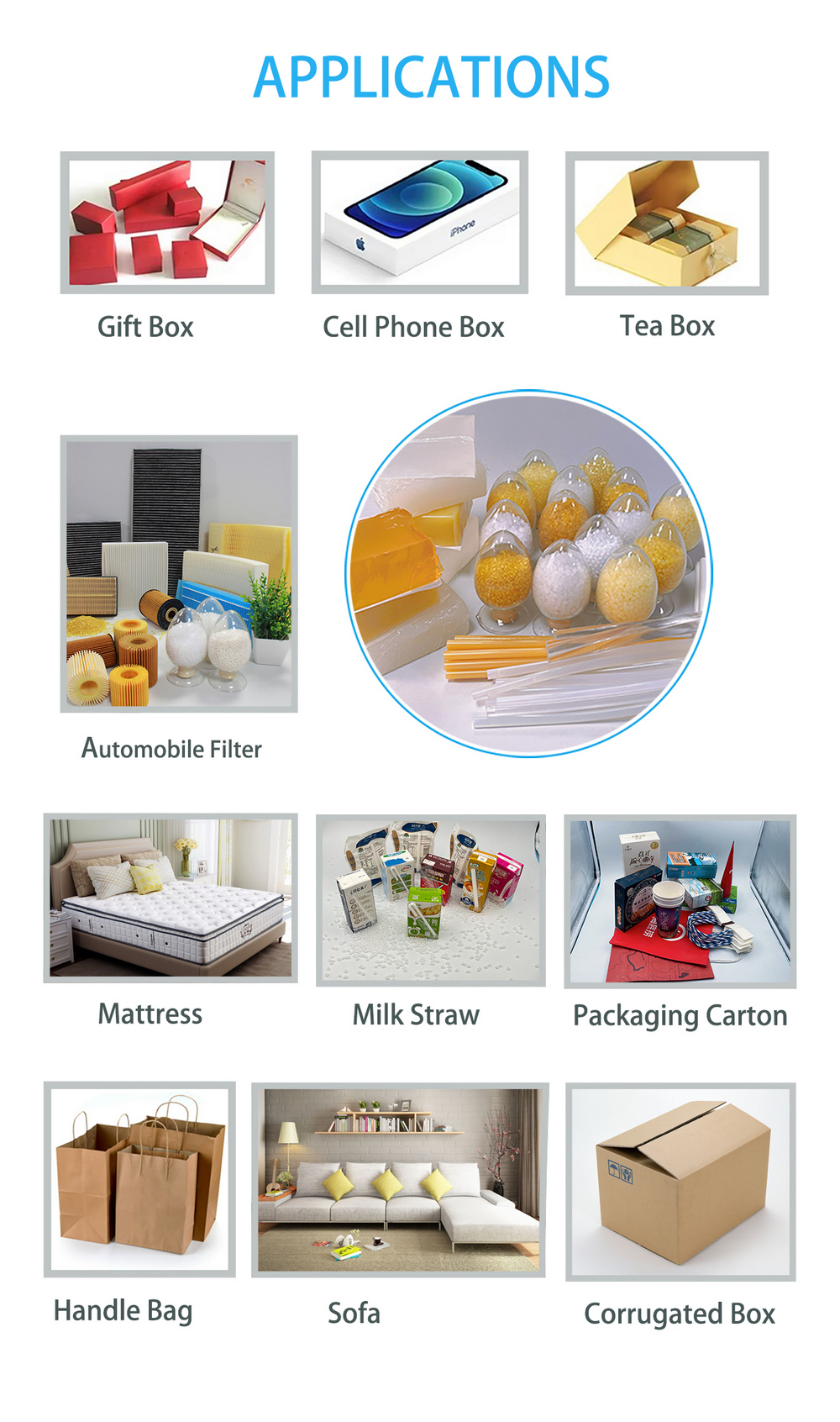
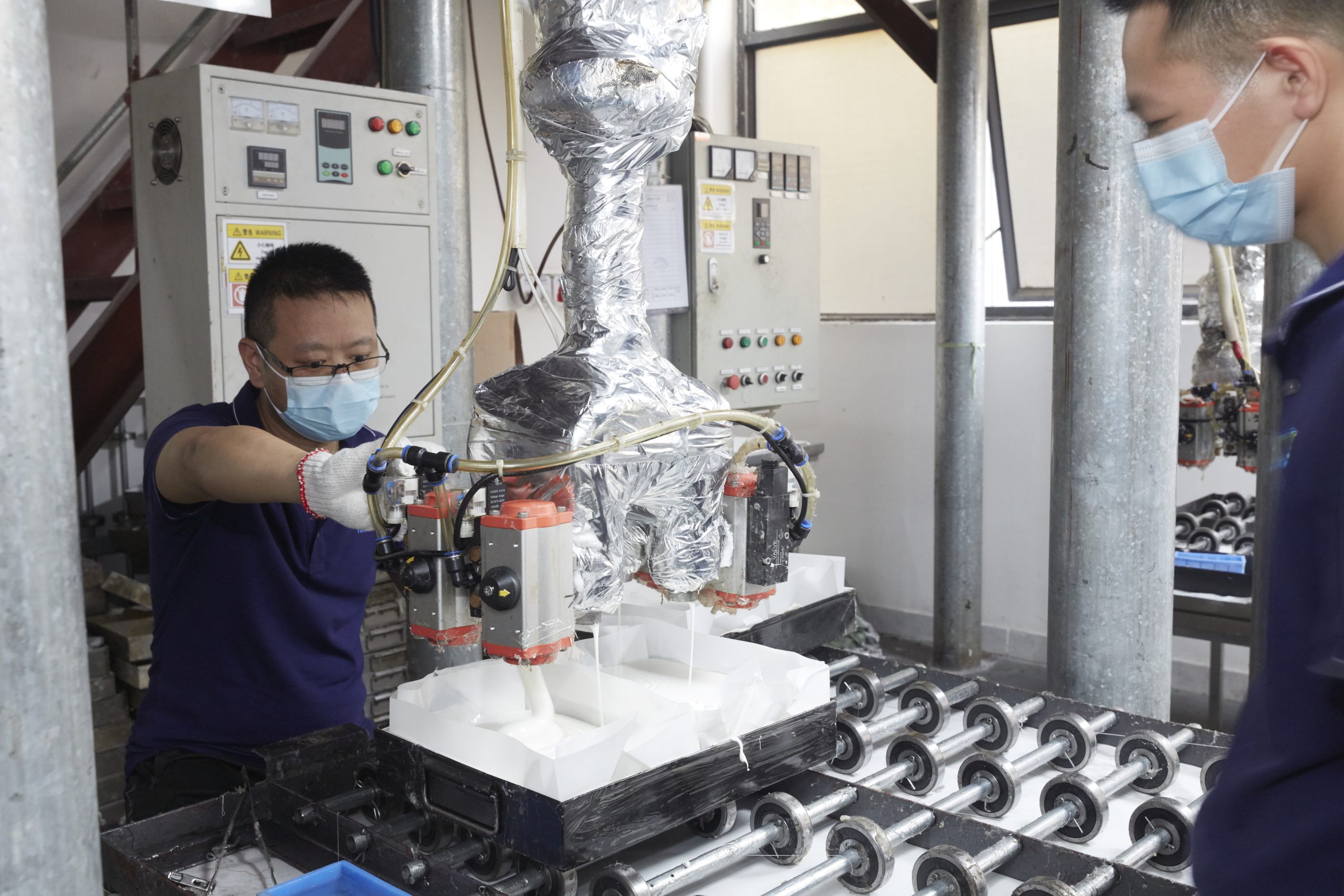
Devote is a Shenzhen-based hot melt adhesive manufacturer supplying global brands in the filtration, hygiene, packaging, automotive, furniture, and textile industries. Our product range is built around zero-VOC polyolefin and EVA chemistries with the following environmental commitments:
- All products are 100% solvent-free and zero-VOC at application
- Full REACH compliance documentation available for all grades
- ISO 9001:2015 certified manufacturing facility in Shenzhen
- ISO 14001:2015 environmental management system in place
- Certificate of Analysis (CoA) and Safety Data Sheet (SDS) provided with every shipment
- Custom formulation service for buyers with specific recyclability or low-temperature requirements
Our polyolefin grades are particularly suited to manufacturers implementing sustainable packaging roadmaps or seeking RecyClass/APR approval for their finished goods. For applications requiring higher thermal performance without sacrificing environmental credentials, our polyamide grades are available with partial bio-based content sourced from castor oil derivatives.
Learn more about our product applications on the application pages or reach out directly through the contact page for a technical consultation.
Frequently Asked Questions
Q1: Are all hot melt adhesives automatically VOC-free?
Yes — all thermoplastic hot melt adhesives (EVA, PO, PA, PES, PSA) are 100% solids formulations containing no solvents, water, or carriers. They emit no VOCs during application. However, the broader category of “reactive hot melt” (PUR) may emit trace isocyanate vapors during the moisture-curing phase and requires proper ventilation. For standard thermoplastic hot melts, no VOC extraction is required under EU or US regulations.
Q2: Can eco-friendly hot melt adhesives be used on high-speed production lines?
Absolutely. Modern polyolefin hot melt adhesives are formulated specifically for high-speed automated application via slot die, spiral spray, and bead nozzles at speeds exceeding 300 m/min in hygiene product lines and 120 cycles/min in filter assembly. The key parameter to verify is viscosity at application temperature — for most high-speed equipment, grades in the 500–2,000 cps range at 160–175°C perform optimally. Devote’s technical team can provide viscosity-temperature profiles for any specific equipment setup.
Q3: How do I verify that a hot melt adhesive is compatible with my recycling certification requirements?
The most reliable path is to request the adhesive supplier’s RecyClass or APR test report for the specific packaging substrate combination you use (e.g., PO adhesive on PE pouch, or EVA on corrugated board). If no test exists for your exact substrate, suppliers can typically arrange a funded test in partnership with an accredited laboratory. Devote can provide existing test reports and facilitate custom substrate testing on request. Additionally, consulting the RecyClass online database (recyclass.eu) allows you to check pre-approved adhesive-substrate pairings without commissioning new tests.
Ready to Make the Switch to VOC-Free Adhesives?
Transitioning from solvent-based adhesives or older EVA formulations to eco-friendly hot melt adhesive VOC-free technology does not require a complete production line overhaul. In most cases, the change is a direct drop-in replacement with minor equipment temperature adjustments. Devote’s application engineers provide full technical support — from initial viscosity matching through to production line validation and certification documentation.
Whether you are responding to a retailer sustainability audit, preparing for EU IED compliance, or simply looking to reduce your Scope 3 emissions profile, Devote has a formulation and a support team ready to help. Contact us today to request samples, product data sheets, or a no-obligation consultation with our technical sales team.