Choosing and Using Hot Melt Adhesives in Cold Environments
An Industry-Specific Guide
Hot melt adhesives (HMAs) are versatile bonding solutions, but cold environments present unique challenges. Low temperatures can affect viscosity, open time, and final bond strength, leading to application failures or product performance issues. Understanding how to select and apply HMAs for cold conditions is essential across industries. This guide outlines key considerations and best practices for ensuring reliable adhesion in low-temperature settings.
Key Challenges in Cold Environments
- Reduced Tack and Wetting: HMAs cool rapidly, shortening the time available to form a proper bond.
- Increased Viscosity: This makes dispensing difficult and can lead to poor substrate penetration.
- Thermal Shock: Products may experience contraction and stress, testing adhesive flexibility.
- Crystalline vs. Amorphous Polymers: Crystalline polymers (e.g., polyolefins) solidify quickly and are more brittle in cold; amorphous polymers (e.g., EVA, APAO) remain tacky longer and often offer better cold flexibility.
Industry-Specific Recommendations
1. Automotive Industry
- Applications: Interior trim, wire harnessing, insulation, gaskets.
- Recommended HMA Types: Polyamide (PA) or flexible polyurethane (PUR) hot melts for their resistance to temperature cycling and oils.
- Key Considerations:
- Choose adhesives with low-temperature flexibility (often tested down to -30°C or lower).
- Pre-heat substrates if possible to prevent rapid chilling of the adhesive.
- Ensure adhesives comply with automotive volatility (fogging) and odor standards.
2. Textile & Apparel
- Applications: Shoes, outdoor clothing, technical textiles.
- Recommended HMA Types: Reactive polyurethane (PUR) and specific polyester (PES) adhesives that remain flexible and durable.
- Key Considerations:
- Select adhesives with good wash and dry-cleaning resistance even at low temperatures.
- Cold environments may require higher application temperatures—ensure fabrics are heat-resistant.
- Test bonds after thermal cycling to simulate real-world conditions.
3. Electronics
- Applications: Component assembly, wire tacking, potting, and sealing.
- Recommended HMA Types: Low-outgassing EVA or specially formulated PUR with good dielectric properties.
- Key Considerations:
- Avoid thermal shock to sensitive components by using lower application temperatures or staged heating.
- Use adhesives with high purity to prevent corrosion.
- In cold settings, ensure bonds can withstand contraction stresses without cracking.
4. Packaging
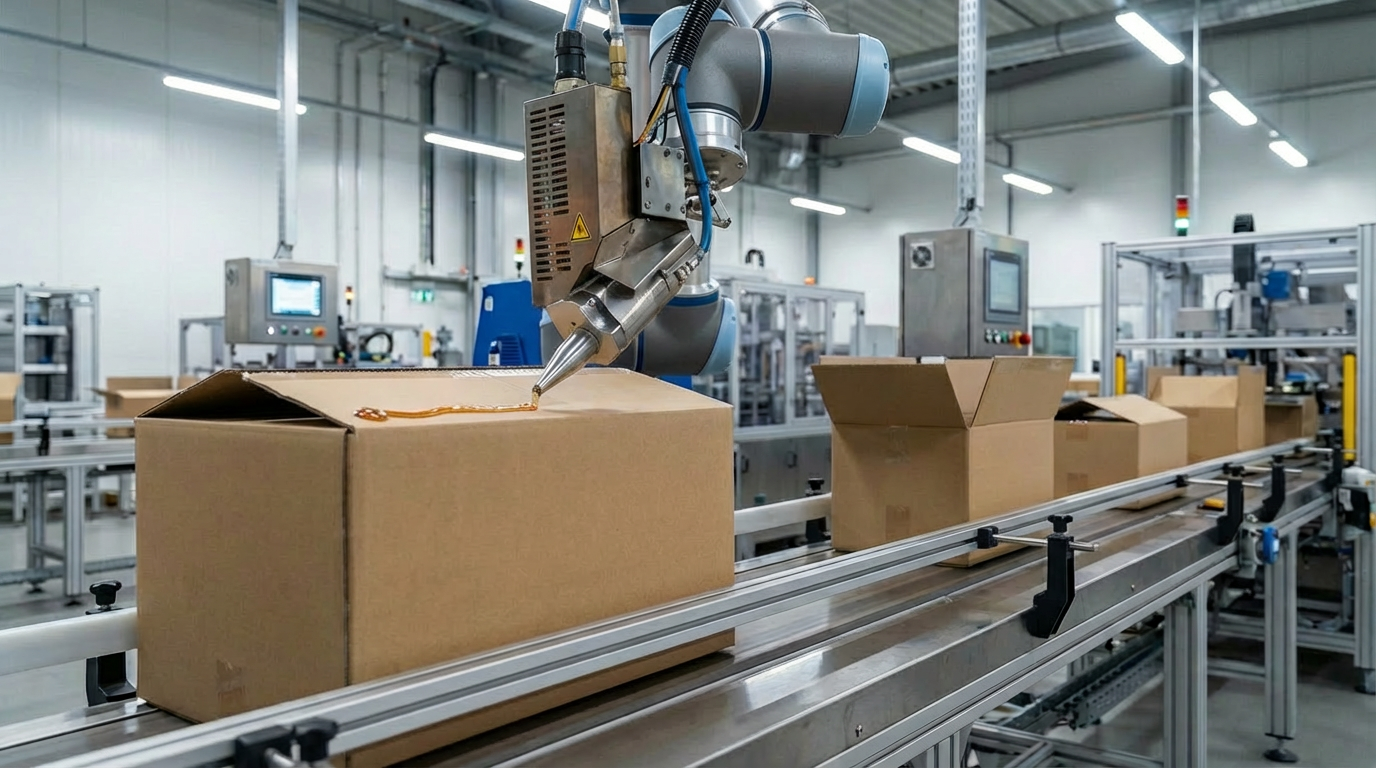
- Applications: Case and carton sealing, pallet stabilization, frozen food packaging.
- Recommended HMA Types: Fast-setting EVA or metallocene polyolefin for frozen food packaging; APAO for flexible bonds in cold storage.
- Key Considerations:
- For frozen food, use FDA-compliant adhesives with high resistance to moisture and low temperatures.
- Adjust application equipment to maintain consistent bead shape despite cold ambient air.
- Increase adhesive volume slightly to compensate for rapid cooling on cold substrates.
5. Construction & Outdoor Products
- Applications: Window and door seals, insulation, outdoor signage, roofing membranes.
- Recommended HMA Types: Butyl rubber-based hot melts or modified asphalt adhesives for waterproofing; high-tack APAO for general bonding.
- Key Considerations:
- Select adhesives with a wide service temperature range (e.g., -40°C to 80°C).
- Surface preparation is critical—remove frost, moisture, or dust before application.
- Consider using primers on difficult surfaces like certain metals or plastics in cold weather.
General Best Practices for Cold Environments
- Pre-condition Materials: Store adhesives and substrates in a controlled environment before use if possible.
- Optimize Equipment: Use heated hoses and nozzles to prevent adhesive solidification in the applicator.
- Increase Application Temperature Slightly: This extends open time and improves wetting, but stay within the adhesive’s thermal stability limits.
- Test Thoroughly: Conduct bonding tests under real-world low-temperature conditions to validate performance.
- Monitor Humidity: Cold air often holds less moisture, but condensation on cold surfaces can inhibit bonding—control the climate when possible.
Conclusion
Successfully using hot melt adhesives in cold environments requires understanding both material science and practical application adjustments. By selecting adhesives formulated for low-temperature flexibility and durability, and by adapting handling and application processes, manufacturers across industries can achieve strong, reliable bonds despite the chill. Always consult with adhesive suppliers for technical data sheets and specific recommendations tailored to your industry’s needs.
For more information,Please Contact:
Allen Kong
Oversea Business Manager
sales001@tong-de.cn | www.devoteglue.com
Tel/whatsapp : +86 18822882087 (Allen)
About Devote®:
Devote®, under Shenzhen Tongde New Materials Co., Ltd., is a specialized provider of hot melt adhesives and integrated solutions for automotive filter production. With a strong focus on innovation and customer support, Devote® serves clients worldwide, helping them achieve manufacturing excellence and business growth.


Polyester (PES) Hot Melt Adhesive: Best Choice for Textile and Footwear Bonding
Polyester (PES) hot melt adhesive has become the preferred bonding solution for textile and footwear…

Hot Melt Adhesive Storage and Shelf Life: Best Practices for Manufacturers
Understanding hot melt adhesive storage and shelf life is one of the most overlooked yet…
What Is Hot Melt Adhesive? A Complete Guide for Industrial Buyers
If you manufacture packaging, filters, furniture, or hygiene products, you likely depend on adhesives every…